
Arts research, startups and biodiversity: Government receives first National Strategy for Science, Technology, Knowledge and Innovation

Know Hub News
· Santiago

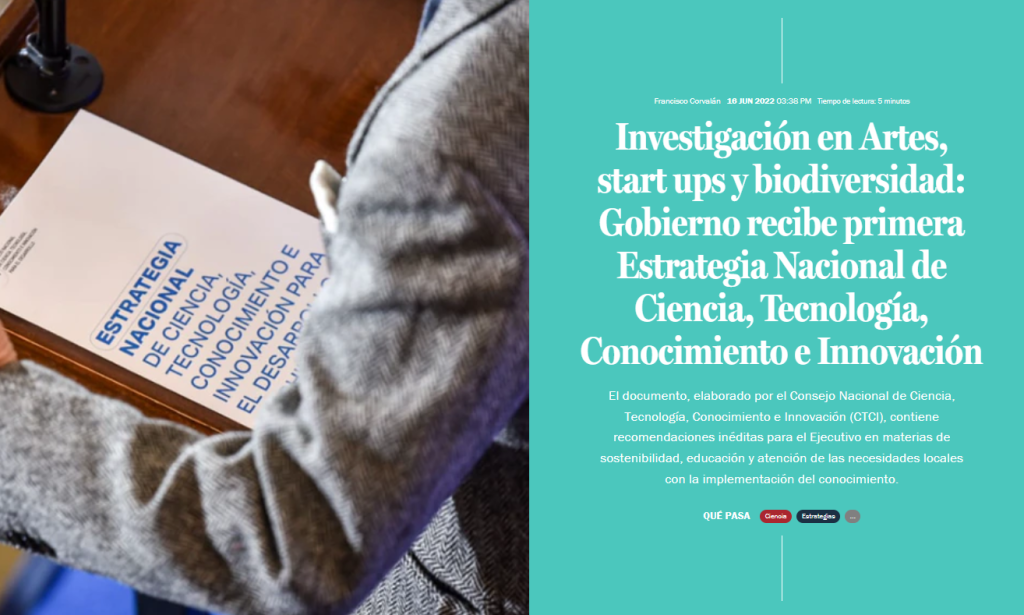
Source: La Tercera
“Today I am here on behalf of the President, precisely because of a significant scientific advance: the vaccine.” With that phrase, Minister Giorgio Jackson linked the reason for today’s gathering with the absence of the President, Gabriel Boric, who had to suspend his activities for the day due to discomfort from the latest dose of his SARS-CoV-2 vaccination schedule.
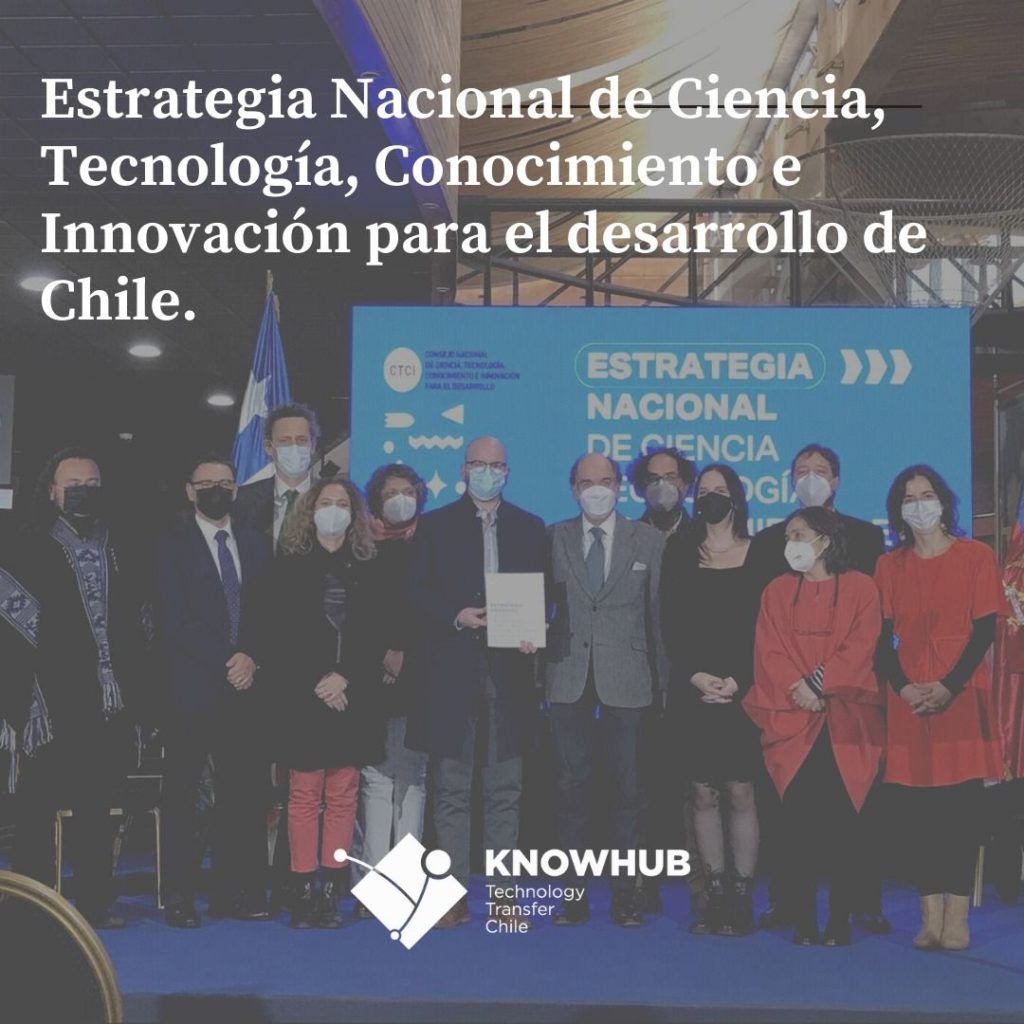
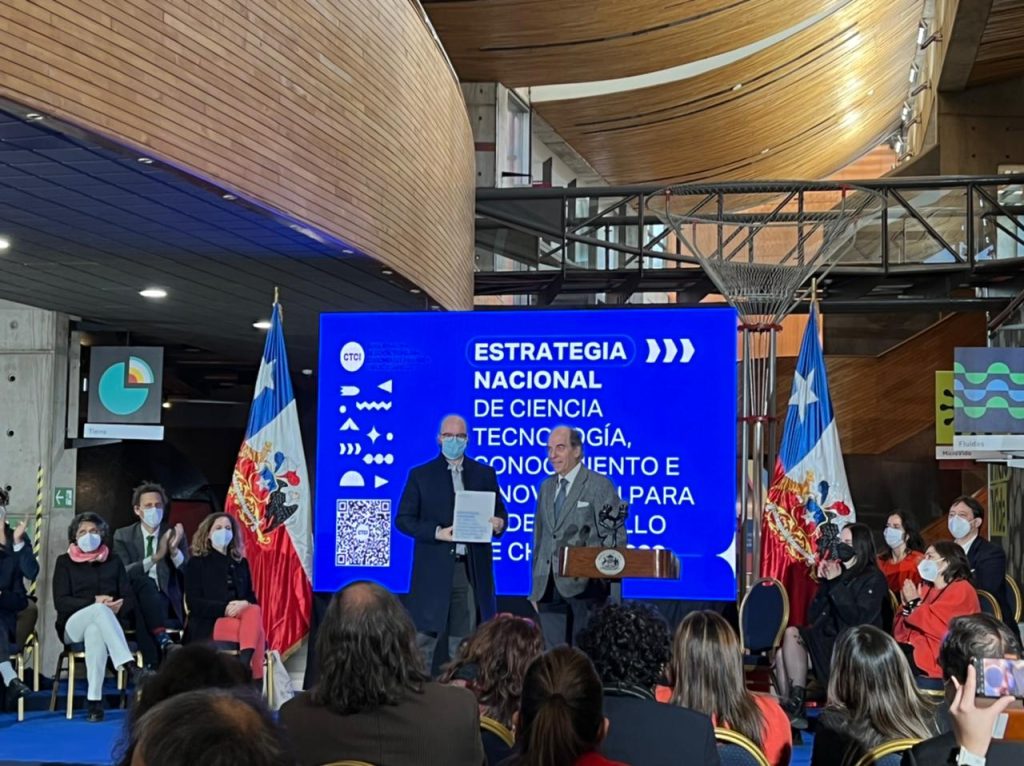
Government authorities, members of Congress, and representatives of academia, entrepreneurship and large companies gathered at the Museo Interactivo Mirador. The purpose was to hand over to the Executive the new National Strategy for Science, Technology, Knowledge and Innovation.
Prepared by the National Council for Science, Technology, Knowledge and Innovation, it is a new version of what was previously the National Innovation Strategy, which now broadens its scope. In addition, this document incorporates research in the Arts and Humanities for the first time, in order to enrich the understanding of current challenges and ethical deliberation.
The Minister Secretary General of the Presidency, Giorgio Jackson, symbolically received the document on behalf of President Gabriel Boric. He stated that “as a Government, we are not only adopting this Strategy, but we will work with the respective ministries to translate it into concrete actions and also commit the resources needed to make this long-term plan a reality. The minister added that “we must proudly champion this CTCI Strategy for Development, and each person should contribute from their communities, whether academia, business or entrepreneurship, so that this is not a document stuck in a QR code or a presentation, but a process that moves forward.”
The president of the CTCI Council, Álvaro Fischer, highlighted that “one of the fundamental things this Strategy includes is underscoring the need for citizens to recognize and embrace the importance of science, technology, knowledge and innovation for the country’s development. It is an issue we emphasize in the document, but it depends on the momentum and priority the government wants to give it, something we have not achieved as a country because urgent matters have always pushed these issues down the road.”
Likewise, the Minister of Science, Flavio Salazar, stated that “this becomes a very relevant input, since it has a long-term vision we share, and the actions we will undertake during this administration are about turning these ideas into concrete actions and specific initiatives that move the system toward that relevance, and that steer the country toward sustainable development connected with its people and its territories.”
For her part, the Undersecretary of Science, Carolina Gainza, highlighted the points of agreement between the National Strategy and the Government’s program and that of the Ministry of Science. These relate to the idea of favoring collaboration over competition. “We share the diagnosis, so insisting on collaboration represents a structural change in how we understand the workings of the CTCI system and its relationship with the rest of society,” she said.
Another significant point of convergence between the Strategy and the Government Program is the role given to state research institutions and collaborative research. In addition, Undersecretary Gainza highlighted the value the Strategy places on research in the Arts, Humanities and Social Sciences, which “recognizes the distinctive nature of these areas and that their multidisciplinary integration with other areas of knowledge will be encouraged.”
Javier Ramírez, executive director of Know Hub Chile, highlighted that one of the most relevant aspects of this strategy is the explicit recognition of CTCI as a tool and not an end in itself. “Its vision and purpose are directly related to generating well-being for the population, where CTCI is the most suitable means to achieve it,” he stressed.

Contents of the Strategy
In addition to explicitly incorporating guidelines for areas such as Arts and Humanities research, which previous versions did not include, this new CTCI Strategy places a strong emphasis on biodiversity preservation and ecosystem sustainability, given the crucial contribution that science and knowledge, together with technology and innovation, can make to advancing this challenge that threatens life today.
The Strategy contains a chapter specifically devoted to strengthening the CTCI ecosystem, which brings together researchers, innovators, technology hubs and science- and technology-based startups, among many other players. Among other things, it stresses the need to deepen the range of disciplines the ecosystem promotes and the diversity of roles and career paths available to those who take part in it.
In addition, the Strategy recommends strengthening international ties to achieve critical mass and reach the scale required for significant contributions, leveraging the country’s territorial particularities and highlighting the value of its regions through Regional CTI Strategies that are harmoniously coordinated and contribute to the National Strategy.
The document proposes accelerating the transformative capacity of science, technology, knowledge and innovation through what it calls “catalysts.” These are “building a Country Narrative” that creates an identity before the world; addressing national challenges; working toward ecosystem sustainability and biodiversity preservation; and greater public-private complementarity in CTCI. And, finally, promoting education that fosters imagination, curiosity and critical thinking as the fundamental values of this new Strategy.
Read the La Tercera article here: https://www.latercera.com/que-pasa/noticia/investigacion-en-artes-start-ups-y-biodiversidad-gobierno-recibe-primera-estrategia-nacional-de-ciencia-tecnologia-conocimiento-e-innovacion/RCCSOZ2JMRAT5J5F3NYBFYOANI/
More information about the National CTCI Strategy: https://lnkd.in/dVtx2tJ7