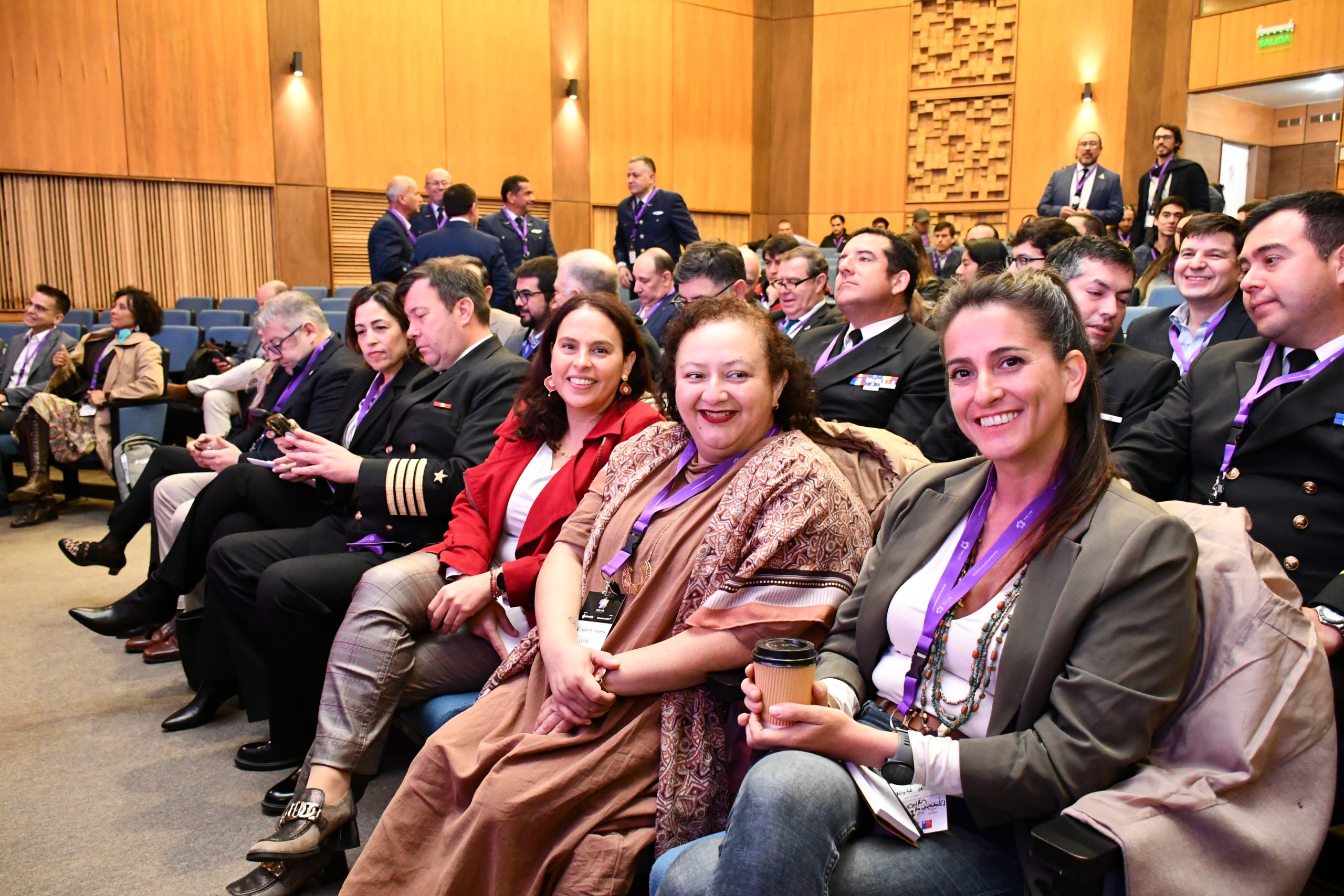



The Biobío Region hosted an unprecedented meeting between traditionally separate worlds: academia, defense, industry and entrepreneurship came together at the first national dual innovation event, joining forces to tackle the country’s strategic challenges through collaborative technology solutions.
More than 200 people attended the Dual Hub Summit 2025, the first dual innovation gathering held in the Biobío Region. The event, organized by Know Hub Chile in collaboration with the Universidad del Bío-Bío, took place on May 6 and 7 and brought together representatives from defense, academia, industry and entrepreneurship, marking a milestone in aligning research, development, innovation and entrepreneurship capabilities with the country’s strategic needs.
For the first time in the region, a space for effective collaboration between the civilian and defense worlds was created, with a common goal: to accelerate the country’s development through dual-use technology solutions that have a positive impact on both citizens and national defense.
Connecting capabilities for national development
“We wanted to spark a conversation between players who don’t normally meet. This event showed that it is possible to bring together scientific, technological and industrial capabilities in a collaborative and strategic way,” said Javier Ramírez, executive director of Know Hub Chile.
Francisco Mackay, director of the Navy’s Technological Innovation Center (CiTA), praised the event, noting that “bringing together science, technology and defense players makes it possible to find solutions with real impact and to make our production base more sophisticated.”
During the event, funded by Corfo and sponsored by Lockheed Martin and Saab, key topics such as the space economy, shipbuilding and regional capabilities were addressed. National and international dual innovation experiences were also showcased, such as the exoskeleton technology developed by the Universidad Austral de Chile together with Lockheed Martin, which is now seeking applications in healthcare.
In addition, progress on the National Space Center, part of the National Satellite System, was presented, and Corfo announced the upcoming entry into force of the new Public Procurement for Innovation mechanism, which will make it easier for tech startups to work with the State.
Innovation with a global vision at the Dual Hub Summit
One of the highlights of the gathering was the keynote by Dr. Güler Koçak, founder and CEO of SPACELIS Space Technologies, a startup leading the development of next-generation solar photovoltaic technologies with both space and defense applications.
Recognized as one of Australia’s leading space entrepreneurs and a member of the innovator network of NATO’s DIANA initiative, Dr. Koçak shared her experience driving dual-use solutions that address strategic challenges through science and advanced technology.
Her participation brought a valuable international perspective on the role of innovation in critical sectors, strengthening the dialogue between civilian, academic, industrial and defense players that the Dual Hub Summit seeks to foster.
“Dual innovation is not a trend; it is a necessity. This event has allowed historically distant sectors to talk, get to know each other and plan joint initiatives,” said Ramírez, underscoring the unprecedented and strategic nature of the gathering.
Each of the sectors that took part in the Dual Hub Summit is contributing experience, technological capabilities and strategic vision to build effective collaboration that makes it possible to develop solutions with impact in both the civilian and defense worlds. This joint effort shows that dual innovation is not only possible, but necessary to address the country’s challenges from an integrated and sustainable perspective.