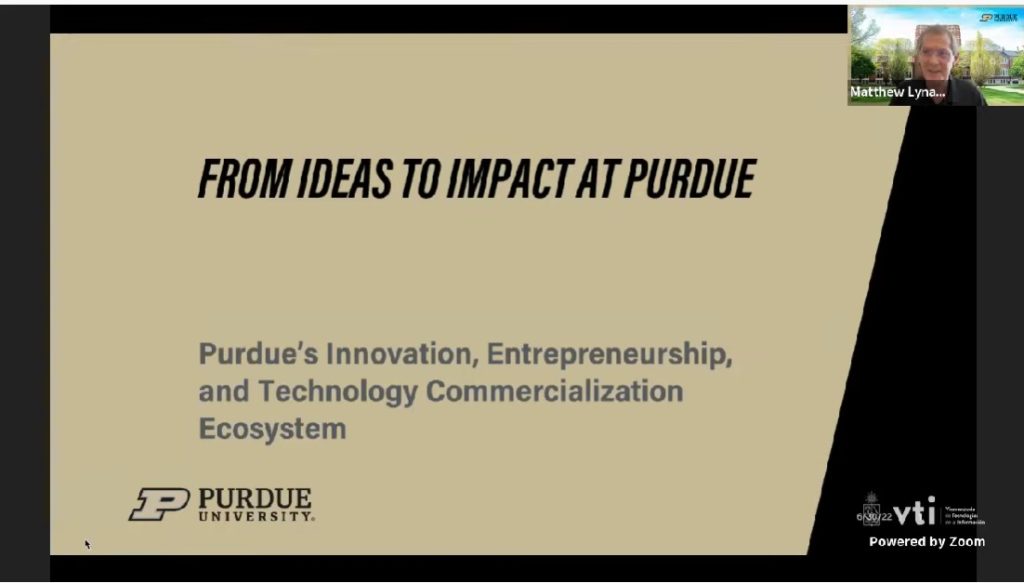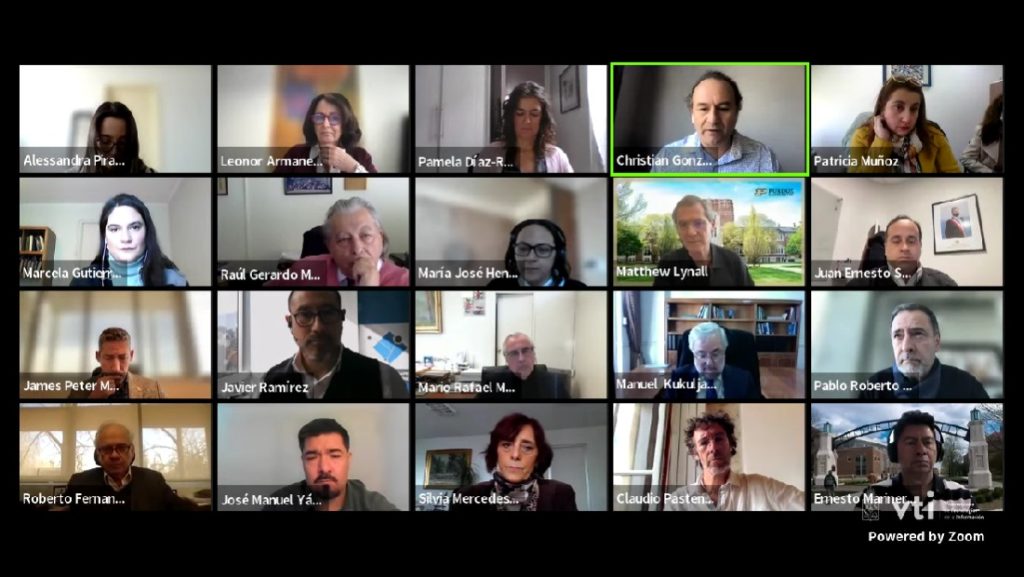



With the keynote lecture “From Ideas to Impact at Purdue” by Professor Matthew Lynall, Avrum and Joyce Gray Director of the Burton Morgan Center for Entrepreneurship at Purdue University, the Ciencia 2030 Universidad de Chile Program was officially launched on Thursday, June 30.
The event was attended by Professor Leonor Armanet, Acting Vice Rector for Academic Affairs of the Universidad de Chile; Marcela Gutiérrez, from the Equality Policy Division of the Ministry of Women and Gender Equity; Juan Ernesto Sepúlveda, Head of the Public Policy Division at the Ministry of Science, Technology, Knowledge and Innovation; and Christian González Billault, General Director of the Ciencia 2030 UCH program. The Executive Director of Know Hub Chile, Javier Ramírez, took part as a guest along with other authorities.
The Ciencia 2030 Project seeks to strengthen the Universidad de Chile’s work in innovation, technology transfer and science entrepreneurship, increasing its impact nationally and internationally. The initiative will implement a strategy to support students, faculty and researchers from four faculties in turning their ideas and R&D results into solutions with industrial and social impact.
Know Hub Chile supports the Universidad de Chile, one of its partner institutions, through the Know Hub Building program, which seeks to strengthen the institutional capacity of Know Hub partners in innovation, as well as to develop capabilities in managing research results and intellectual property, integrate technology transfer best practices, build an innovation culture, and support the creation and growth of technology-based startups.
This work is carried out using the Innovation Corps (I-Corps) methodology, created in the United States in 2011 by the National Science Foundation (NSF) to promote the commercialization of technologies developed in academia. The NSF certifies the institutions that work with this curriculum. One of them is the University of California, Riverside (UCR), a strategic ally of Know Hub Chile.
With the I-Corps method, Know Hub Chile helps science-based startups (EBCTs) discover and consolidate a business model with an emphasis on their value proposition and customer segment, through early validation with industry.
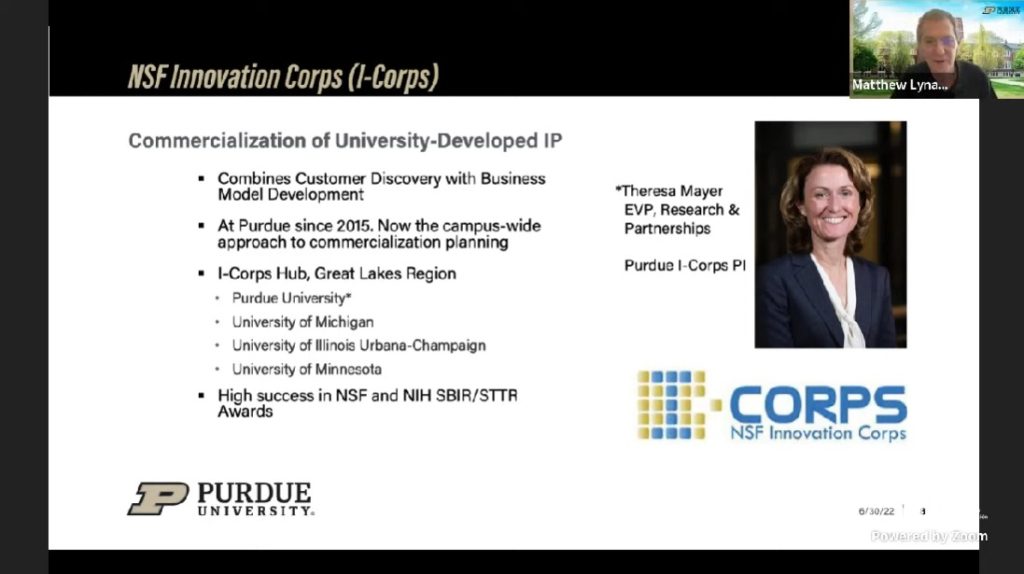
In his presentation, Professor Lynall highlighted how the I-Corps method enables researchers to discover who the customers for their technology are, that is, who will actually use it and in what context. With I-Corps they can discover the commercial potential of their research and the path to commercialization before investing more time in their work, and thus find a real solution to customers’ problems.
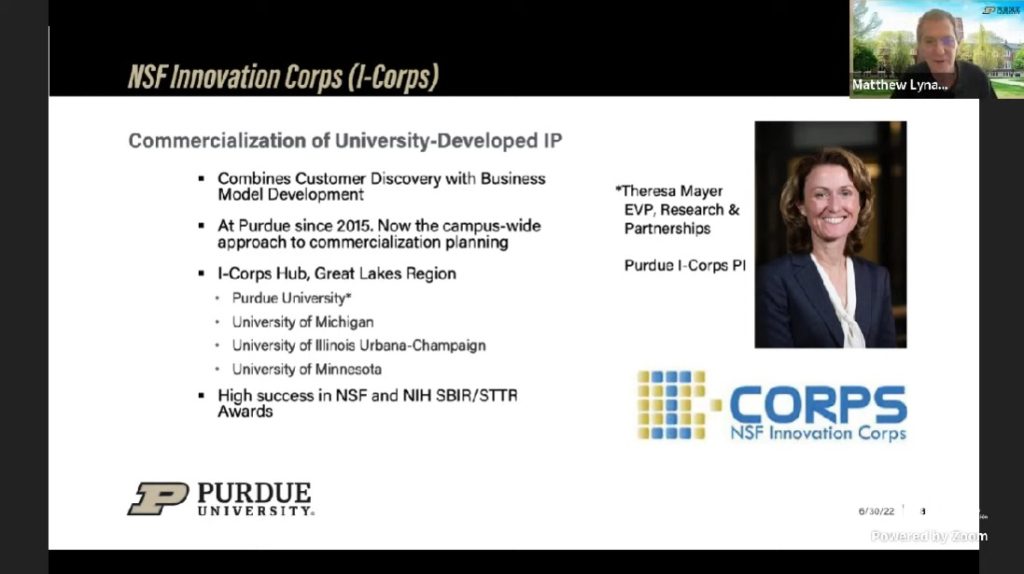
I-Corps has operated at Purdue as the Purdue NSF I-Corps Site since 2015 and as the Midwest I-Corps Node since 2017, helping researchers discover the commercial potential of their research and the path to commercialization before they invest heavily in more applied work, such as prototyping or starting a company.
Purdue University is also part of the Midwest I-Corps Node in partnership with the University of Michigan and the University of Illinois Urbana-Champaign. In Chile, Know Hub Chile implements the I-Corps methodology through a strategic alliance with the University of California, Riverside (UCR).
More information about Know Hub Chile’s I-Corps methodology: https://knowhub.cl/programa-kh-ignition/