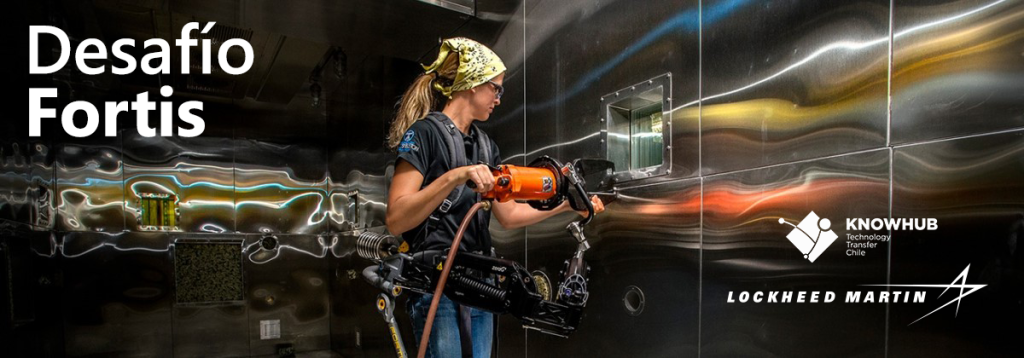



On Thursday, December 1, at EXPONAVAL 2022, the 12th International Naval Industry Exhibition and Conference for Latin America, an official ceremony presented the winning team of the FORTIS Challenge: the Universidad Austral de Chile, whose proposal will expand the applications of exoskeleton technology in the industrial and healthcare fields.
Lockheed Martin, a global aerospace and security company primarily engaged in the research, design, development, manufacture, integration and sustainment of advanced technology systems, products and services, launched the “FORTIS Challenge” in Chile in collaboration with Know Hub Chile.
This initiative seeks to enhance an exoskeleton product/technology designed by Lockheed Martin, called FORTIS. Engineering departments of Chilean universities linked to the Ingeniería 2030 program were invited to take part in this innovation challenge.
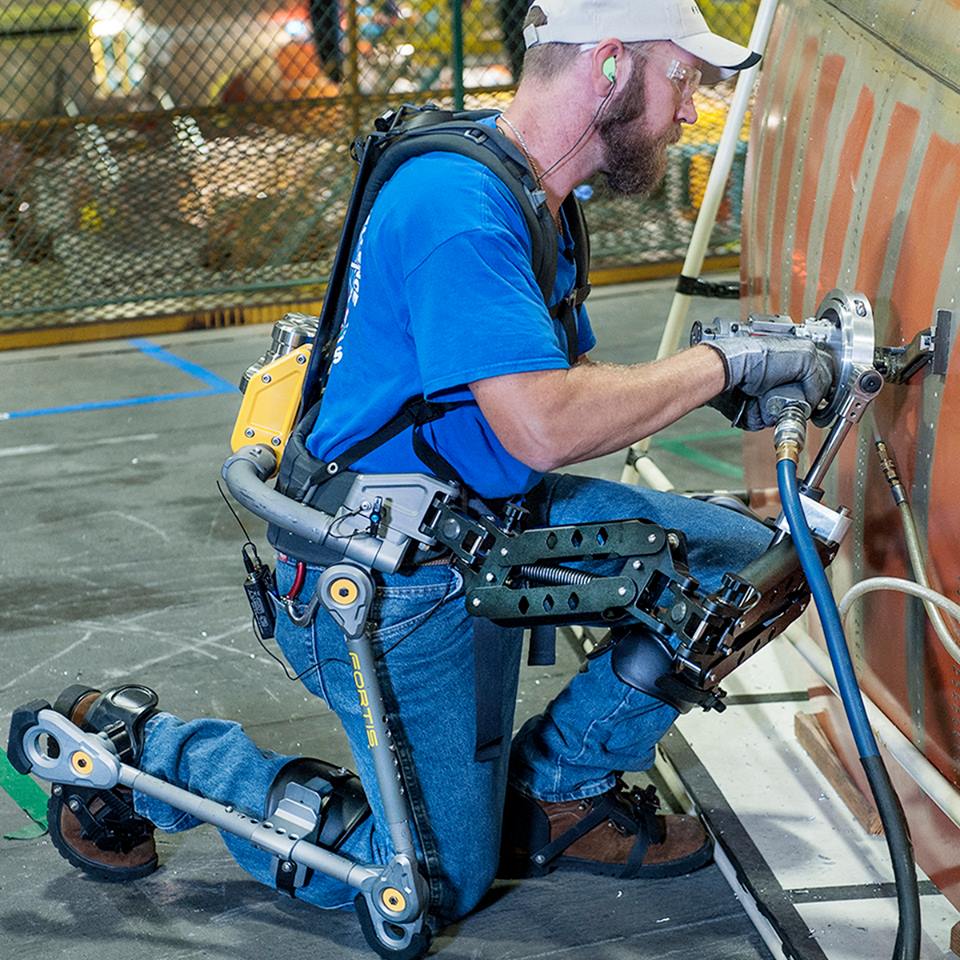
FORTIS is a lightweight, unpowered exoskeleton designed by Lockheed Martin. It makes tools weighing up to 16 kilos feel weightless, reducing user fatigue and improving worker safety. It stems from Lockheed Martin’s research into exoskeletons to help soldiers carry heavy equipment over long distances, and applies the same exoskeleton operating and energy expenditure principles to industrial environments.
Teams from Chilean universities linked to the Nueva Ingeniería para el 2030 program applied to the FORTIS Challenge until September 16, 2022. In the final review of the projects, Know Hub Chile, together with Lockheed Martin’s technical committee, selected the one submitted by the Universidad Austral de Chile (UACh) to solve the FORTIS Challenge 2022.
The winning project was proposed by a team from the University Digital Fabrication and Prototyping Laboratory, LeüfuLab, together with faculty from UACh’s School of Engineering Sciences and School of Medicine. It first set out to analyze the potential occupational applications of FORTIS in the industrial and healthcare fields in the Central-South, South and Far South macro-regions, in areas such as forestry, aquaculture, agribusiness and shipbuilding. These fields involve repetitive physical activities that demand high effort and affect joints such as shoulders, hips and knees, among others. Other applications are also proposed in emergency services, mainly related to load handling.
In addition, the selected project proposes validating ergonomic and productivity improvements for the use of FORTIS in new areas, which could ease its adoption across the occupational sector in general, backed by ergonomic and productivity indicators showing the improvement brought by the exoskeleton.
Winning team
On Thursday, December 1, at EXPONAVAL 2022, the 12th International Naval Industry Exhibition and Conference for Latin America, Lockheed Martin and Know Hub Chile presented the winning team of the FORTIS Challenge, UACh, whose proposal will expand the applications of exoskeleton technology in the industrial and healthcare fields.
“Lockheed Martin is delighted with the efforts and presentation of the Universidad Austral de Chile, as well as with the proposed applications for FORTIS technology. The partnership with Know Hub and the results of the FORTIS Challenge have been very inspiring, and we look forward to our continued growth and support across the Chilean defense industry and STEM ecosystem,” said Lorraine Ben, Vice President for Latin America at Lockheed Martin.
For Javier Ramírez, executive director of Know Hub Chile, the FORTIS Challenge has a significance that goes beyond achieving its specific objectives, as a major step forward in the participation of defense in the national science, technology, knowledge and innovation ecosystem. “Through these critical alliances and the joint development of technologies, both for defense and for the civilian market, it will serve as a renewed boost in Chile’s progress toward a knowledge-based society and economy,” he stressed.
UACh has methodically been building an innovation-oriented environment within its academic community. In that same vein, this award with a global innovation and development player such as Lockheed Martin “is important confirmation that we are on the right track,” said Dr. Germán Rehren, Director of the Development and Innovation Department of UACh’s Office of the Vice Rector for Research, Development and Artistic Creation.
Rehren highlighted two strengths of the FORTIS Challenge winning team: the innovation experience of the LeüfuLab Laboratory of the School of Engineering, which leads the proposal, and the wide variety of disciplines brought together in the search for solutions (medicine, engineering, kinesiology, among others). “Which shows the importance of collaborative innovation,” he noted. He also highlighted the role of InnovING 2030 in bringing the winning team together.
“From the Vice Rector’s Office, we will work to consolidate and scale this collaboration with Lockheed Martin, to keep driving collaborative R&D at our University, and to give industry engagement the importance it deserves for specific current and long-term challenges in innovation and technology transfer,” Rehren said.