
Chilean Navy invites tech ventures to solve institutional problems with up to CLP 90 million in funding

Know Hub News
· Santiago

In 2019, Avante was the first open innovation program launched by a Defense body in Chile. It encourages the participation of national science and entrepreneurship in technological solutions that contribute to the institution’s performance and to civil society. In its third edition, it focuses on modernizing the institution’s preventive medicine model. An attractive opportunity for entrepreneurs to gain access to a large client of strategic importance.
Source: Qué Pasa, La Tercera
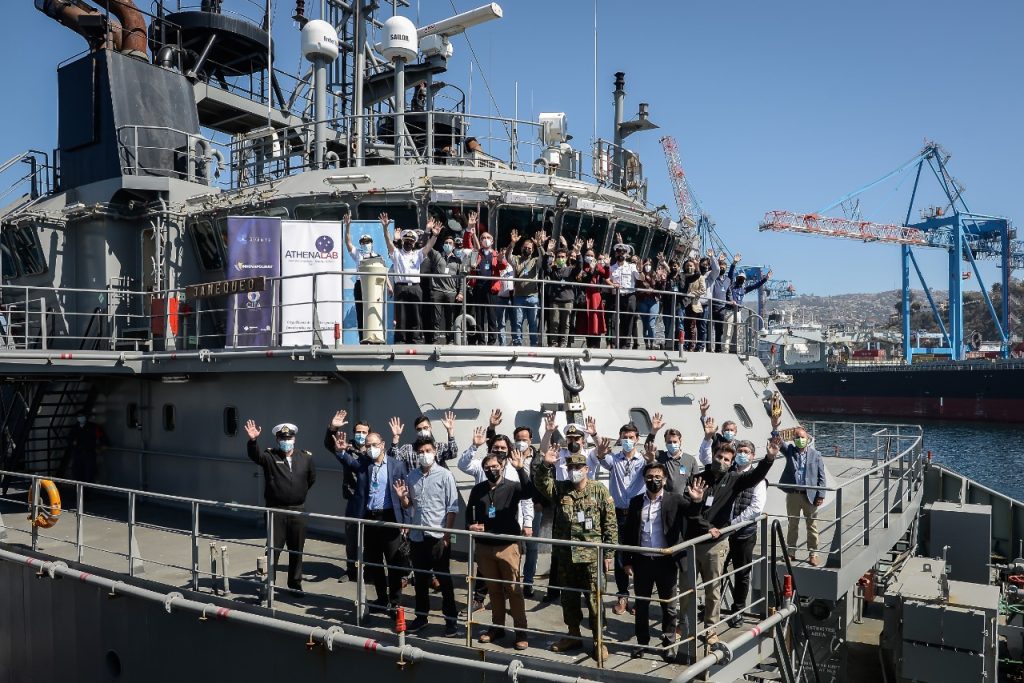
In every successful innovation ecosystem, the defense sector has been one of the main drivers. Historically, it is a field that has constantly sought to incorporate new technologies. Several military technologies that have become part of everyday life and have improved quality of life are examples of this.
Digital camera technology, so common today, is one of them. It was first used in spy satellites to capture high-resolution aerial images of adversary facilities, a technology that advanced in the military sphere, especially during the Cold War, until the first self-contained digital camera was created in the 1970s.
Another example is the popular drone, which was first used in defense as a remotely controlled unmanned aerial vehicle to survey battlefields or carry out missions considered dangerous for people. Starting in the 1990s, drones began to be used to launch missiles. Something similar has happened with technologies such as radar, microwave ovens and the internet, among many others.
Challenges in Chile
In Chile, however, and despite its growing sophistication, “there was a lack of systematic collaboration between the CTIC ecosystem and defense,” says Javier Ramírez, executive director of Know Hub Chile, a science and technology transfer corporation that, to support the incorporation of defense into the Chilean innovation ecosystem, created the Know Hub Dual-Tech program. The program seeks to solve technological problems of institutions in the sector by drawing on the capabilities of the national science, technology, knowledge and innovation (CTCI) ecosystem and by fostering science-based startups (EBCTs), so that they can become sophisticated suppliers to the defense sector and the civilian market (dual technologies).
Dual-Tech encompasses a series of initiatives, “with the understanding, moreover, that incorporating defense will generate immense benefits, not only for the R&D&I ecosystem, but for the country in general,” Ramírez says.
One of those initiatives is Desafío Avante. Launched in late 2019 jointly by the Naval Polytechnic Academy, the Chilean Navy’s Directorate of Programs, Research and Development, and Know Hub Chile, it encourages national science and entrepreneurship to take part in the search for technological solutions that contribute to the institution’s better performance in fulfilling the duties the State requires of it.
When they set themselves the goal of helping incorporate defense into the R&D&I ecosystem, Ramírez explains, they imagined it would be a long process and that perhaps after a few years they would spark some kind of interest in the Armed Forces. However, he adds, they found that the Navy was not only thinking along similar lines, but that its incorporation into the ecosystem is part of its strategic R&D plan, and it was actively looking for a partner to design and implement Avante in the short term. “The alignment of objectives and motivations made the process enormously easier,” he says.
Rear Admiral Fernando Le Dantec, Director of Programs, Research and Development of the Navy, explains that Avante has become a tool that takes engagement with the innovation and entrepreneurship ecosystem to a new level, “where we can count on professionals from various fields and backgrounds at the service of our Navy in the effort to close defense-oriented technological development gaps.”
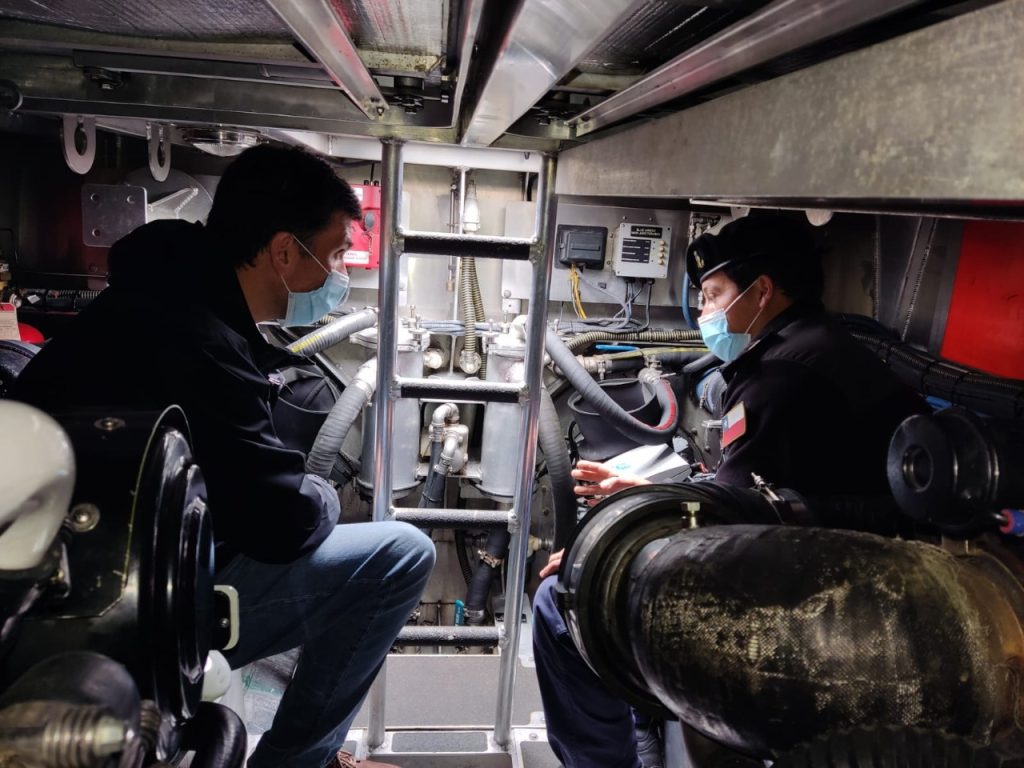
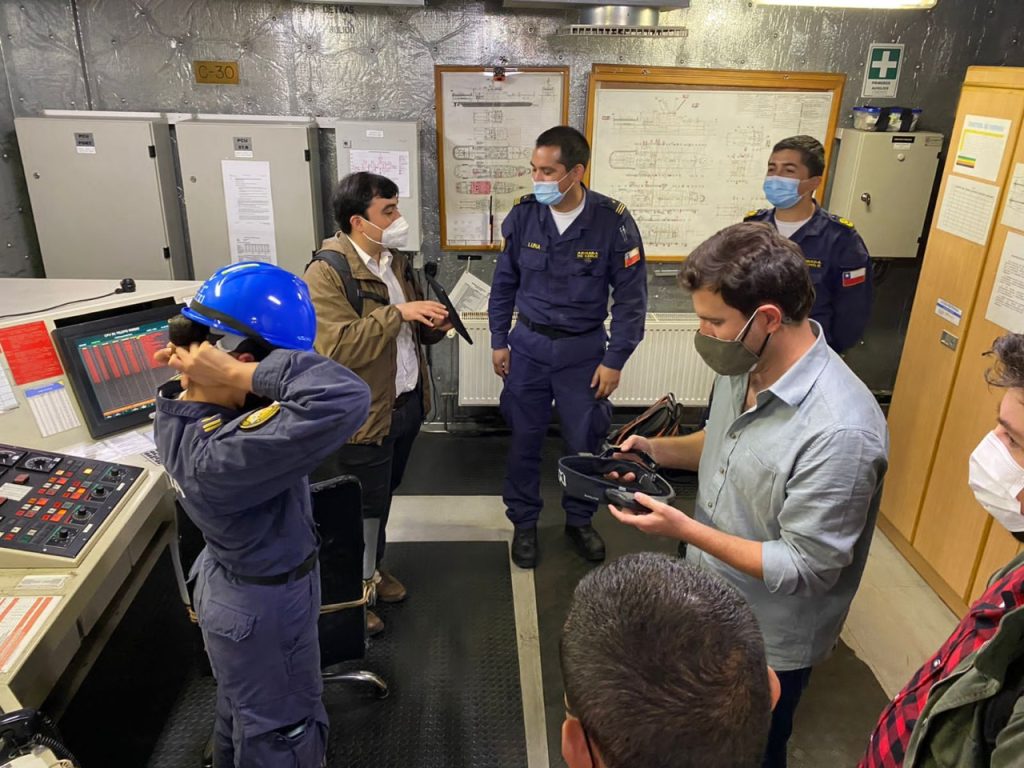
Science- and technology-based innovations
In its first edition, the challenge focused on Maritime Domain Awareness (MDA), that is, effective knowledge of everything associated with the maritime domain. Given that Chile is responsible for monitoring and controlling 26.5 million square kilometers of ocean, developing technologies in this field is highly relevant.
The challenges focused on detecting illegal fishing in Chilean jurisdictional waters so as to obtain evidence of illicit activities, detecting non-cooperative contacts and detecting anomalous behavior of ships and vessels transiting maritime areas under national responsibility.
In its first edition, in 2020, the winning team was Acústica Marina, a science- and technology-based company specializing in hydroacoustic technology, which developed AI-powered monitoring stations to detect vessels in real time. Its work with the Navy and in the civilian market has continued, with progress in the salmon farming market (theft detection) and environmental protection.
Marcela Ruíz, marine biologist and executive director of Acústica Marina, describes the initiative as a great opportunity: “the Chilean Navy is a highly recognized institution internationally, which is why we value that it is opening up to invite EBCTs to solve a real problem. As civilians, we appreciate this openness, that they give us their time and let us interview them to learn about the technological problems they need to solve.”
For Ruíz, initiatives of this kind should be replicated in other branches of the Armed Forces. “All the knowledge that exists in Chile can generate science- and technology-based solutions; we are qualified to take on these challenges. The Navy is doing well with its call for open science because it recruits civilians and invites them to solve real problems. The State needs to call on Chilean entrepreneurs: the people are here, the capacity is here, the knowledge is here, there’s no need to go looking in Europe,” she stresses.
In 2021, the challenge addressed the availability of naval assets. The winning team was Jaksol, led by Felipe Bueso, a digital platform for predictive and prescriptive maintenance of engineering systems that helps improve the planning and management of naval assets. “Avante gives you the foundations to validate the problem and the technological solution you are proposing to solve it. It is more than a prize: it gives you knowledge that will serve you forever and, above all, help you develop technology or science- and technology-based ventures more successfully,” he says.
In total, 62 teams of tech entrepreneurs have taken part in both editions of Avante, and four of them were selected by Corfo in its Startup Ciencia competition, funding that allows them to refine their technologies to solve dual problems.
The third edition (Avante 3) has just been launched and focuses on modernizing the Chilean Navy’s preventive medicine model. It has three focus areas: health data capture, the definition of risk indices and dynamic scheduling of medical care.
Eight teams have been selected for the program, four of which move on to the second phase, where they receive up to CLP 2 million each to develop their minimum viable product, that is, one that meets the minimum functions required to be launched on the market. Of the four selected, two winners will be chosen and will receive a total of CLP 90 million to implement a six-month work plan, scale up and bring their technology closer to market.
Science- and technology-based ventures wishing to take part can apply until January 30, 2023 on the website: https://knowhub.cl/avante/