
Elementum, the startup that makes synthetic fuel from plastics, will set up a plant in Punta Arenas

Know Hub News
· Santiago

The company created a thermochemical process that uses shredded plastics to produce a liquid that can be used as heating fuel or as additives for fuels, lubricants, paint solvents or anti-corrosion products.
Source: Diario Financiero
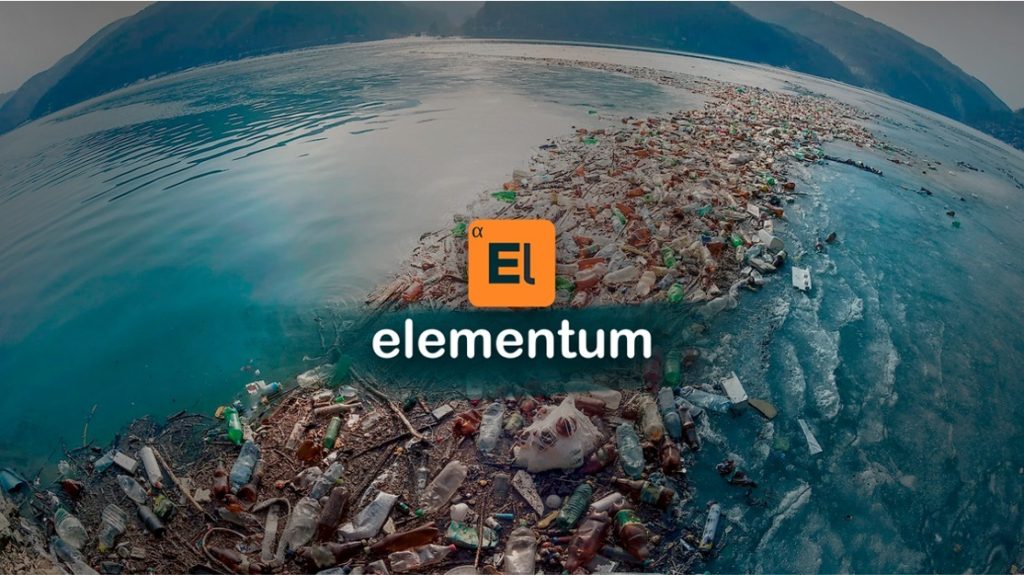
In 2015, Ariel Crespo and José Duguet, PhD students at the Faculty of Physical and Mathematical Sciences of the Universidad de Chile, came up with the idea of developing a process that would give plastic a second use. After research and testing, in 2018 they founded Elementum, a startup that is part of the Know Hub portfolio. They already have a plant in Santiago, and in 2023 they will set up a second plant in Punta Arenas.
The startup developed a portable, modular, scalable and easy-to-use device that, through a thermochemical process, transforms shredded plastic waste into organic solvents with multiple applications, such as lubricants, anti-corrosion products, paint solvents, heating fuel -with physicochemical properties similar to the kerosene used in stoves, industrial boilers and power generators- or fuel additives.
Crespo says they managed to develop “our own process, which involves no combustion, so it generates no carbon dioxide, CO2, and requires no water, so its water footprint is zero,” he says.
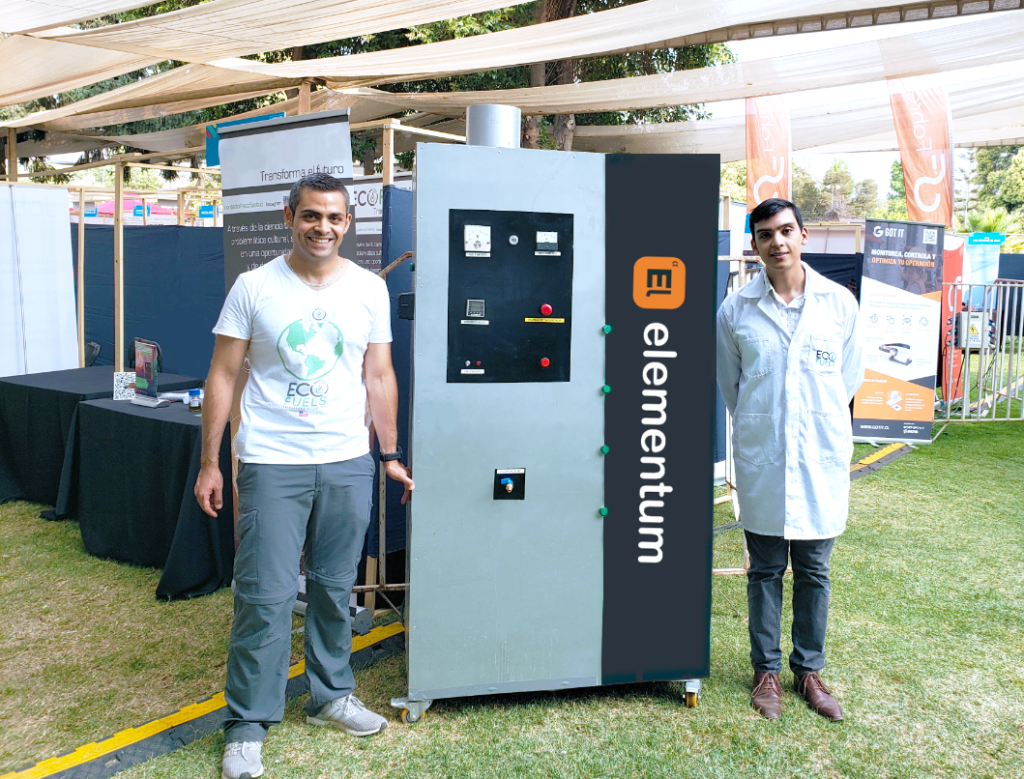
With this technology, the startup transforms a wide variety of plastics -except PVC, due to its high chlorine content- into a liquid in which the polymer chains are gradually broken down. “We make all the products in this same machine; the only things we change are some thermochemical parameters and the type of plastic used,” the entrepreneur explains.
Crespo notes that the business model rests on two lines. The first is competing with traditional plastic recycling, “at almost the same price as it is done today: we receive plastic from several companies we work with and charge them a fee.” The second is selling the products made by Elementum, which are bought by the same companies that supply the plastics.
The startup, which started with its own capital and with support from programs such as the Las Condes Municipality’s Innovation and Entrepreneurship Fund and Corfo’s Start-Up Chile, has a plant in Santiago with capacity to process 100 kilos of plastic a day.
Expansion to the regions
Crespo reveals that next year they will set up a plant in Punta Arenas. “This would be the first step toward having small units in different places that steadily meet the demand for plastic recycling,” he says.
After consolidating the business in Chile, the entrepreneur says their future plans include expanding to other countries in the region, such as Mexico and Colombia.