Five projects supported by Know Hub Chile win ANID’s VIU 2026 competition

Know Hub News
· Santiago

Initiatives developed at the Universidad Católica del Maule, the Universidad del Bío-Bío and the Universidad Católica de Temuco structured their proposals with the corporation’s backing to speed up the arrival of their developments in the productive sector.
The National Research and Development Agency (ANID) announced the results of the University Research Valorization (VIU) 2026 competition, an edition in which five proposals backed by Know Hub Chile’s support program, Follow Up VIU, were awarded public funding to advance to the technical formulation and commercial validation stage of their prototypes.
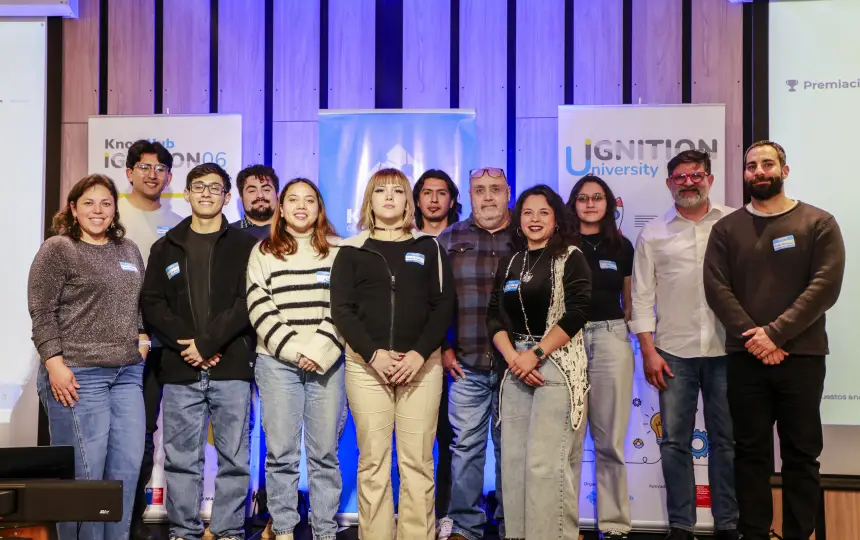
Follow Up VIU provided methodological assistance to the teams, a preparation that included reviewing the technology transfer model and defining strategic intellectual property aspects before submission to the evaluation committee.
“The result achieved by these member institutions demonstrates the potential of regional scientific knowledge when it receives proper preparation at early stages,” says Enzo Pantoja, Ecosystem Director at Know Hub Chile. “Coordinated work with the Technology Transfer and Licensing Offices allowed the researchers to align their technical goals with the real needs of the environment,” he adds.
Applied solutions in industrial sustainability and health
Among the selected initiatives is Biofuelsolutions, a project developed at the Universidad Católica del Maule. This proposal focuses on upcycling agricultural waste to produce bioethanol through biotechnological bioconversion processes, offering a sustainable alternative for agribusiness.
In the Biobío Region, the Textbio Solutions initiative from the Universidad del Bío-Bío will implement a biotechnological service for treating textile waste. The development addresses the degradation of synthetic materials accumulated in industrial processes through applied biological solutions. It is joined by a decision support system, also developed at the Universidad del Bío-Bío, to optimize operational management and water planning for wells, providing tools for more efficient management of water resources.
The Universidad Católica de Temuco secured funding for Biolev, a project focused on the biotransformation of molasses to obtain levulinic acid. This biomass-derived compound is a valuable input for chemical and industrial applications.
In the medical field, the Sitme team at the Universidad del Bío-Bío built an information system focused on medical screening to support the early diagnosis of endometriosis in the public health network.
Methodological support
The working scheme implemented in Follow Up VIU includes a review of regulatory and financial aspects. Participating teams received hands-on proposal-writing workshops and individual mentoring aimed at designing work plans in line with the state agency’s rules.
“Strengthening the relationship between the lab and the productive sectors requires rigorous methodologies,” explains Pantoja. “Our work with member institutions gives teams lasting capabilities so that their developments maintain sustained technical progress,” he says.
The award of these projects consolidated the link between regional research centers and public support instruments. The five initiatives will begin the technical execution phase over the coming months to complete the required operational tests.