KH Ignition UC Temuco begins: the program that seeks to identify innovative ideas from young researchers and students

Know Hub News
· Santiago

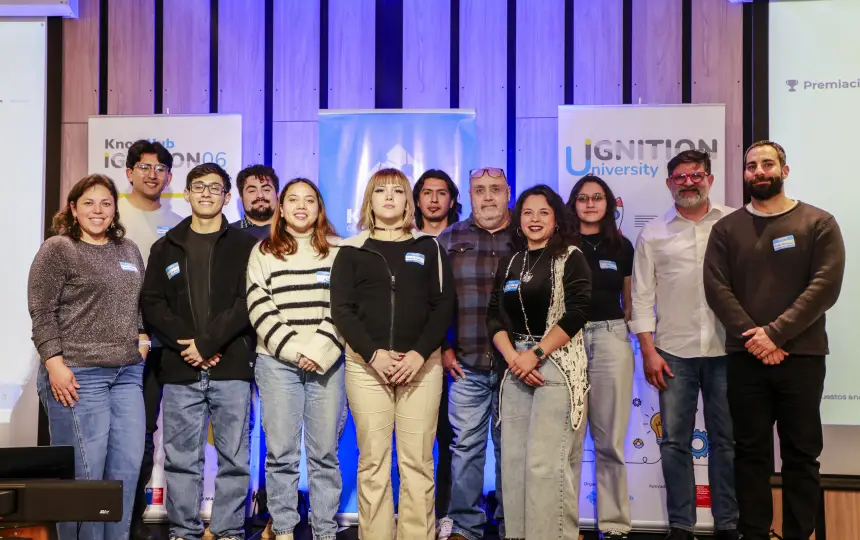
An in-person bootcamp in Temuco kicked off the first activity of Know Hub Ignition Socios.
Know Hub Ignition Socios is an initiative based on customized Know Hub Ignition programs, designed so that member institutions can use it as part of their value proposition within the university and academic community, always according to their internal requirements.
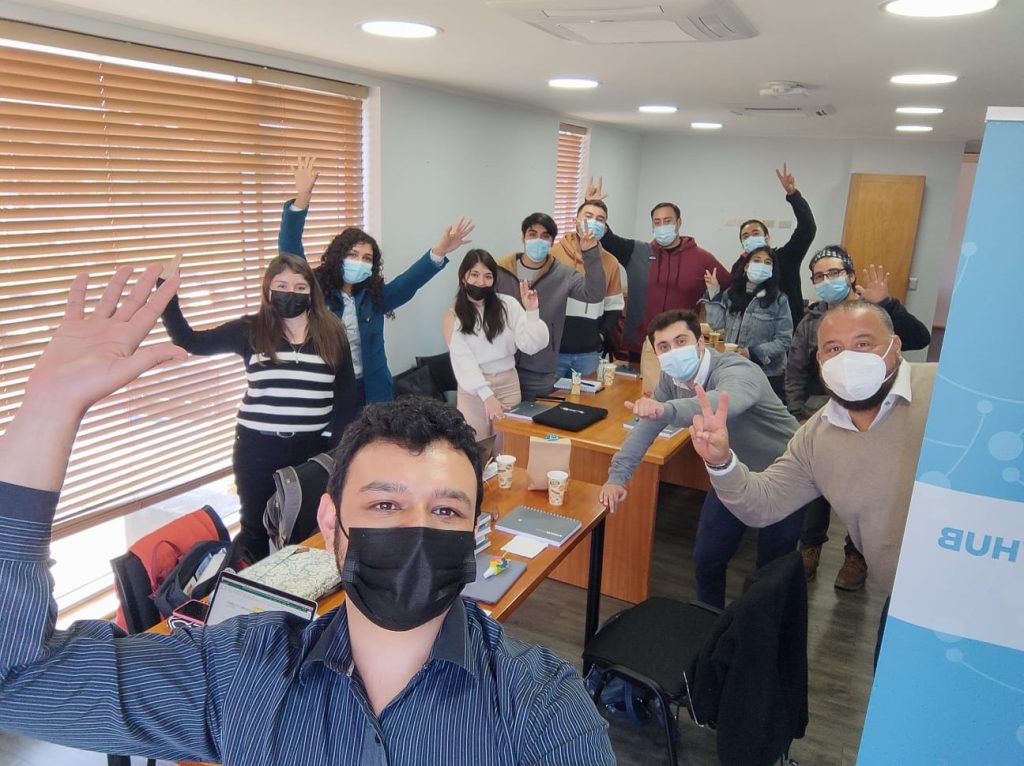
Specifically, Ignition UCT seeks to foster and contribute to the development of an entrepreneurial culture at Universidad Católica de Temuco that involves the entire university community, with an emphasis on students and young researchers.
It also seeks to identify potential ideas or projects from young researchers and students that could become science-based startups (EBCTs).
The opening session was an in-person bootcamp in Temuco, and the program will continue over the following weeks with virtual sessions, in which the teams will receive classes on relevant topics in innovation and entrepreneurship, as well as group analyses, practical exercises and meetings with Know Hub Chile mentors.
Each team will also conduct 2 interviews a week with potential customers or relevant players in the target industry in order to validate and refine their value proposition. By the end of the program, the teams must complete a minimum of 10 interviews in total.
Speaking at the start of the activity in Temuco, the Vice Rector for Research and Graduate Studies at UC Temuco, Dr. Carlos Lüders, said: “we are creating a space where you (the teams) can further develop your creativity and improve on what you have dreamed of, so you can put it into practice, and that is a plus for any professional leaving the university (…) Make the most of this opportunity, take it as a challenge, as a learning experience that is tremendous capital for you (…) These activities allow us to grow as a university.”
For his part, the Executive Director of Know Hub Chile, Javier Ramírez, said: “Behind creating, developing and succeeding with a science- and technology-based venture and turning a research result into a product or service, there is discipline. This can be learned; it is not just good luck or talent. It is difficult and demanding, and many of these skills are the ones we will teach you this week.”
KH Ignition Socios
The story of the Know Hub Ignition program begins in March 2019, when Know Hub Chile and the University of California, Riverside (UC Riverside) launched Know Hub Ignition, one of the first national programs to support science- and technology-based ventures. In March 2020, just as the pandemic began, the second Know Hub Ignition call was launched.
This year, the implementation of customized Know Hub Ignition programs began. The program was made available to our members, who, depending on their internal requirements, will use it as part of their value proposition within the university and academic community.
The teams
Dundun: Inclusive multisensory educational material for proper early stimulation and cohesion of interdisciplinary play, where the central element is for children to have fun while reinforcing sensory, tactile, auditory and olfactory stimulation and acquiring real, effective knowledge
TerapiandO: Interactive platform to support children and adolescents through telematic occupational therapy.
Movilcret: Proposes reducing costs for concrete supply companies arising from leftover material, as well as generating revenue from its sale. It also improves the companies’ corporate image by reducing their environmental impact, since they no longer need to use landfills.
Firkümn: A tool that supports irrigation designers, specifically for drip irrigation systems, optimizing calculation times thanks to the software’s built-in automation.
BioFer: Use of fish farm sludge as a biofertilizer or organic fertilizer. The resulting product or service would be an organic fertilizer obtained from a waste generated in large tonnages, which is particularly rich in organic matter and various nutrients.
Bio-militaris: To address producers’ lack of an organic weed-control tool and to provide an alternative to traditional agrochemicals, the team proposes using the fungus Cordyceps militaris, focused on high cordycepin production, to then formulate a patentable bio-herbicide product.