
Know Hub Chile and APTA promote a program to accelerate the commercialization of technologies developed in academia

Know Hub News
· Santiago

For the third year in a row, this initiative seeks to find potential customers for technologies emerging from universities and thereby validate their value propositions through direct interviews with key industry players.
An idea can help create jobs, drive growth and transform people’s lives. But for that to happen, it needs to go beyond the limits of imagination and respond accurately to society’s needs. Otherwise, a good idea does not thrive and never becomes innovation.
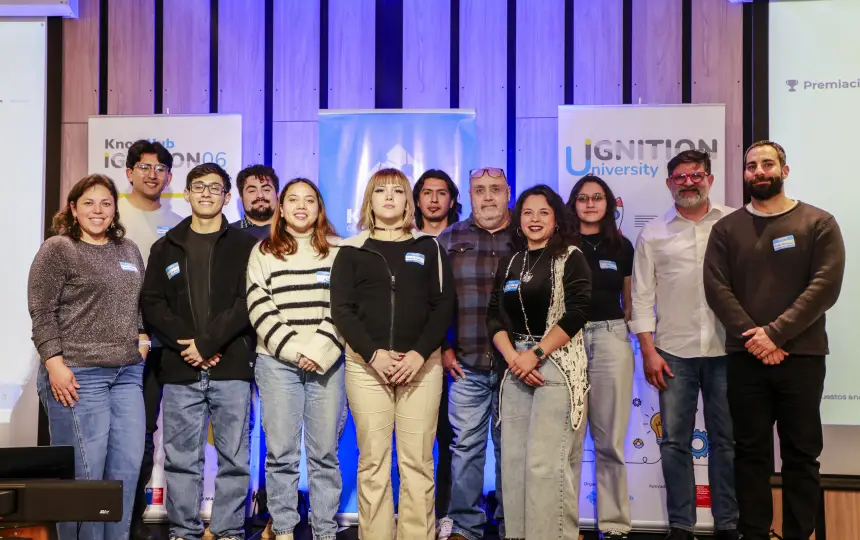
With this premise, Know Hub Chile and Hub APTA created the Beyond Academy program for lead researchers and their teams, an initiative based on the National Science Foundation (NSF) I-Corps methodology and carried out in collaboration with the University of California, Riverside (UC Riverside).
The program seeks to narrow the disconnect between R&D&I projects and industry needs, giving researchers tools to find potential customers for their technologies and validate their value propositions through direct interviews with key industry players (“customer discovery”). In this way, the technology transfer hubs hope to contribute to a cultural transformation of the scientific community, increasing the impact of its research results and technologies.
Beyond Academy benefits the participating team, the institution it belongs to and the customer segment the technology targets. But it also has a positive impact on institutions such as ANID, notes Javier Ramírez, executive director of Know Hub Chile. “That benefit comes from the better use of the public resources invested in the projects, which should seek from the outset to find their place in society. And that is when we reach the true beneficiary: society as a whole,” he stressed.
Program combines the capabilities of two technology transfer hubs
This is the third consecutive year the program has run. In 2020, the first pilot was carried out with the support of UC Riverside, a university certified to teach I-Corps with international mentors trained in the methodology. In 2021, the hubs took the lead in implementing it, while mentoring remained in the hands of UC Riverside. Over six sessions, the participating teams shared the findings from their interviews, information that helped them design an attractive value proposition for their technology for companies.
“Beyond Academy is a joint effort that manages to adapt a methodology and build local capabilities so that we, as hubs, can link science and business more effectively. We know it is the only way to actively ensure that innovations reach the market, thus contributing to the diversification and sophistication of our economy, and that these technologies have a real impact on the lives we lead,” said Varinka Farren, executive director of APTA.
Success stories
Among the teams that have taken part in the program is the one led by Nicolás Rojas, which developed an AI-based telemetry technology to increase operating efficiency and extend battery life in electric bus fleets, under the startup MIDE. Beyond Academy, Rojas explains, helped them understand how the product can fit into the national and international electromobility ecosystem through a unique value proposition, by interviewing various companies that already have experience operating an electric fleet.
The MIDE team is currently testing various vehicle models, both light and heavy; they signed a six-month pilot contract for the telemetry of electric minibuses made by Reborn Electric, which operate at the El Teniente mine to transport workers. This has made it easier to iterate on the product and helped them understand, through data, how electric mobility performs in mining. In the short term, MIDE will consolidate its users and cut their operating costs by more than 40% while extending battery life by more than 2 years.
Another notable team is Mabiomet, a mobile, automated environmental-industry device that makes it possible to quantify and monitor the bioaccessibility of heavy metals and metalloids –such as arsenic, iron, lead and copper- in soils and sediments, applicable to the mining industry.
Mabiomet’s advantage is that it makes it possible to identify real risks of socio-environmental conflicts over potentially contaminated soils, and thereby reduce those conflicts and the costs they bring, which can reach CLP 7 million a month. “We deliver online, real-time results quickly, and we quantify metal bioaccessibility in a certified way with replicability and traceability, both in the lab and in the field; the latter makes us unique in the world,” says Carolina Parodi Dávila, Director of Technology Transfer and researcher at the Department of Industry of the Universidad Tecnológica Metropolitana.