
Know Hub, the hub that helps make defense a relevant player in national innovation, stands out at Innovapolinav 2023

Know Hub News
· Santiago

This non-profit corporation has been working directly with the Navy for several years on defense innovation programs: Avante and PROA I+D. Several activities took place at Innovapolinav, where Javier Ramírez, executive director of Know Hub Chile, spoke at the conference “Innovación dual para el desarrollo del país” (Dual innovation for the country’s development). Know Hub was also present with a stand.
The Innovapolinav Public Innovation Meeting is the longest-running initiative of the research and innovation department of the Naval Polytechnic Academy of the Chilean Navy (Armada de Chile). Its sixth edition took place on November 30 and December 1, focusing on providing a space for the exchange of knowledge, skills, experiences and co-creation between the national science, technology, knowledge and innovation (CTCI) ecosystem and the Navy.
One of the institutions featured at the meeting was Know Hub Chile, a technology transfer HUB whose purpose, together with other initiatives, is to transform Chile into a knowledge-based economy and society.
Innovapolinav featured various conferences, panel discussions, workshops and demonstrations. Javier Ramírez, executive director of Know Hub Chile, spoke at the conference “Innovación dual para el desarrollo del país” (Dual innovation for the country’s development). Know Hub Chile was also present with a stand on both days of the event, where attendees learned about the work and collaboration that this non-profit corporation has been carrying out directly with the Navy for several years on defense innovation programs: Avante and PROA I+D.
Innovation in Defense
The executive director of Know Hub Chile explains that the corporation’s mandate is to transform scientific research results into innovation. To this end, he adds, “our general working methodology is to identify gaps in the value chain between science and the market, and design programs to address them.”
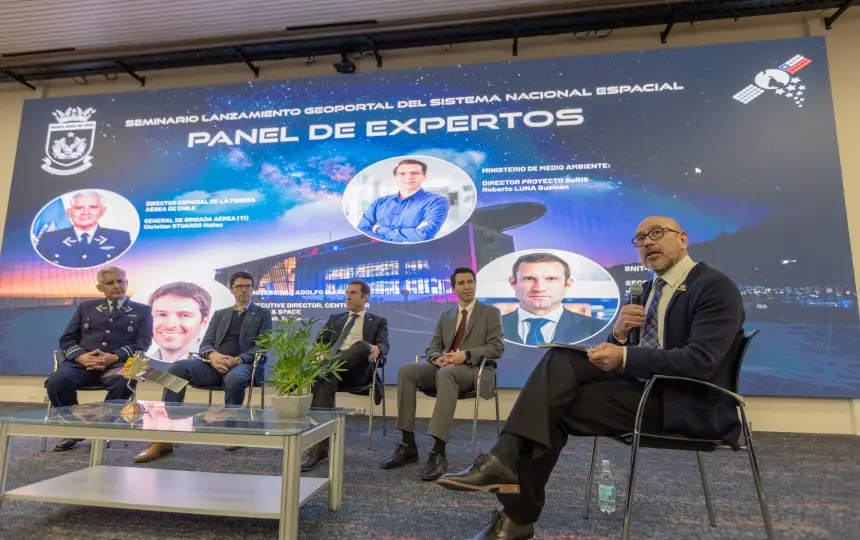
In this context, Ramírez says, one of the main gaps the corporation identified is the lack of systematic collaboration between defense and the ecosystem. “Achieving this collaboration is precisely one of the corporation’s strategic objectives, and based on that we designed a series of programs to achieve it: Avante and Proa with the Navy, Fortis, one of the verticals with Lockheed Martin, and now the Supercomputing challenge with the Air Force,” he says.
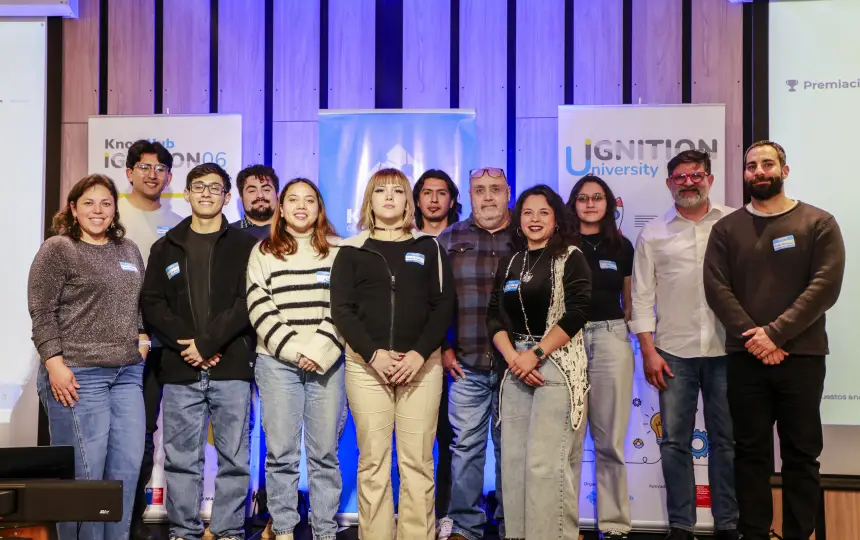
Desafío Avante 2020 was the Navy’s first open innovation challenge, developed together with Know Hub Chile. It seeks to solve problems identified by the Chilean Navy through science- and technology-based startups that can become sophisticated suppliers to defense and the civilian world.
In that first edition, the focus was Maritime Domain Awareness (MDA). The winners of Avante 2020 were Acústica Marina, a team led by Marcela Ruíz, and InnerCore, headed by Sergio Vera.
In 2021, the challenges were related to the availability of naval assets, specifically the proper functioning of vessels. The winners were JakSol, Streltech and PredictiveLab. In its third edition, in 2023, Avante sought solutions for health data collection, the definition of risk indexes and dynamic scheduling to help modernize the institution’s preventive medicine. The winning teams were Yo Me Controlo and Amanda.
Meanwhile, PROA I+D, also developed by the Chilean Navy together with Know Hub Chile in 2023, connects the institution with those conducting research in the country through applied research of mutual interest in which the Chilean Navy can provide unique spaces for testing, piloting and validation. It already has four finalist teams.
The research projects selected in PROA I+D were: “Navy Fuel Cells: Study of the behavior of a PEM fuel cell in marine environments to power vessels and submarines of the Chilean Navy”, from Universidad de Santiago, led by Isaac Díaz; “Hydrophones for ship detection (Hidróforo)”, from Universidad Católica de Chile, led by Federico Fuentes; “New Technology for Systems Oxygenation”, from Universidad Católica de Chile, led by Flavia Zacconi; and “Development of an in-lab evaluation system to determine the performance of systems exposed to marine fouling”, from Universidad de Concepción, led by Felipe Montoya
Identifying gaps
Know Hub Chile has been very active in this area, both in positioning dual innovation within the CTCI ecosystem and in defense, “and in generating experience and data that allow the authorities to design public policies on this matter,” says Ramírez.
The future challenges in defense innovation are varied. On the one hand, Ramírez notes, although the importance of dual innovation has permeated the authorities’ discourse at several levels, “we need to move forward in consolidating it through concrete actions to strengthen it.”
He also points out that more actors from both worlds need to be involved, such as strategic defense companies and venture capital. “The impact of activities and programs of this kind is long-term, so a constant and conscious commitment at the State level is indispensable,” Ramírez explains.