
Lockheed Martin drives the national R&D&I ecosystem in collaboration with Chilean institutions

Know Hub News
· Santiago

Anchored by its presence, local collaborations and investments, this multinational, which develops advanced technology products and services for the aerospace and security industry, expects to maintain continuous growth in Chile and Latin America.
Source: El Mercurio
Lockheed Martin has a 50-year history in Latin America, during which it has established itself as a benchmark in the global aerospace and security industry thanks to its F-16 fighter jets, its C-130 Hercules tactical aircraft and the multi-role Black Hawk helicopters made by its company Sikorsky.
But the U.S.-based multinational is much more than that. It is mainly engaged in the research, design, development, manufacture, integration and sustainment of advanced technology systems, products and services, and has developed a broad portfolio of advanced technologies and systems for aircraft, ships and ground vehicles, responding with unmatched capability to major security challenges. In this context, it also stands out for its strong collaboration with the region’s innovation and science, technology, engineering and mathematics ecosystem.
Its teams have built long-term relationships in different countries, and Chile has been no exception. In support of the Navy’s Type 23 Frigate program, Lockheed Martin Canada signed a contract with the Chilean defense company SISDEF, improving local representation, integration and shipyard access during the COVID-19 pandemic.
Another example of regional collaboration that represents an opportunity for sustained growth for Chilean industry is the relationship with DTS, a subsidiary of Enaer, which won a tender to supply naval combat system goods and services for Lockheed Martin to the Chilean Navy. In particular, they have trained staff and successfully completed the fiber optic connection on the Type 23 Frigates.
The company’s partnership with DTS expanded in 2020 with initial support for its work on the “Respiro para Chile” ventilator project, to support the country’s recovery efforts in the midst of the pandemic.
Lockheed Martin aircraft were also integral to operations during the pandemic in Chile, with the Chilean Air Force transporting critical patients on C-130 and Black Hawk aircraft.
Thus, Lockheed Martin’s activities in Chile not only strengthen national security but also bring long-term economic and industrial benefits, as well as driving innovation and inspiring new generations.
DESAFÍO FORTIS
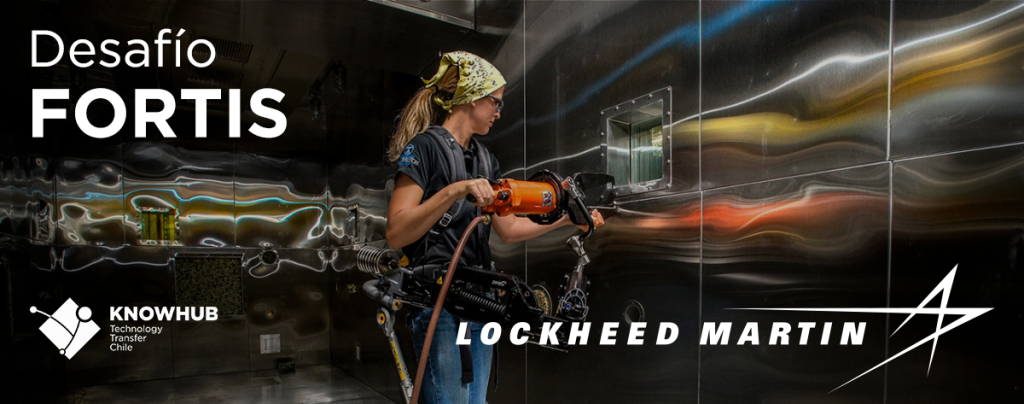
As part of its efforts to educate and inspire the scientists, engineers and mathematicians of the future, Lockheed Martin’s focus on science, technology, engineering and mathematics (STEM) outreach includes support for programs, events and campaigns centered on student performance, teacher development, and ethnic and gender diversity. Along these lines, the company, in collaboration with Know Hub Chile, launched the “Desafío Fortis”, which seeks to improve the exoskeleton designed by the multinational, called Fortis, through an innovation challenge in which the engineering departments of Chilean universities linked to the Ingeniería 2030 program were invited to take part.
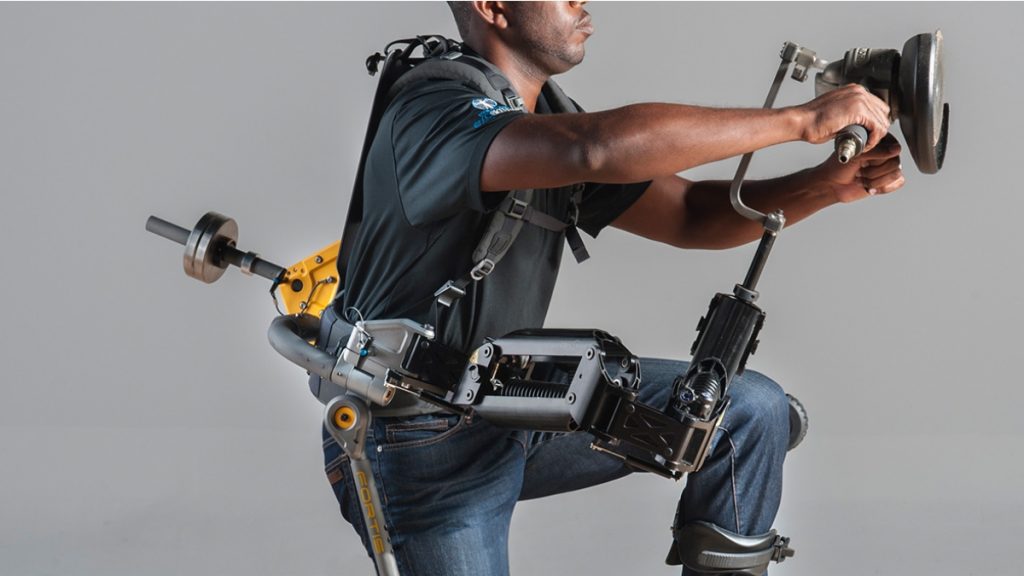
Fortis was born from Lockheed Martin’s research on exoskeletons to help soldiers carry heavy equipment over long distances, applying the same principles of operation and energy expenditure to the development of exoskeletons for industrial settings. It is a lightweight, unpowered device that makes tools weighing up to 36 pounds feel weightless, reducing user fatigue and improving worker safety.
Lorraine Ben, vice president for Latin America at Lockheed Martin Corporation, says they are very excited to have launched this challenge, since STEM education is a critical issue for the company, which understands firsthand the importance of educating young people in these areas, as its future success and technological edge depend on a steady supply of highly skilled technical talent.
“We look forward to seeing the innovations the students will bring us”, she says.
Javier Ramírez, executive director of Know Hub Chile, adds that the “Desafío Fortis” has significance beyond achieving its specific goals: it is another important step in bringing defense into the national science, technology, knowledge and innovation ecosystem, this time with the involvement of a global industry leader such as Lockheed Martin.
“We hope this is the start of systematic cooperation among the participants and that, through the co-development of technologies for both defense and the civil market, it will serve as a renewed boost to Chile’s progress toward a knowledge-based society and economy”, the executive director of Know Hub Chile emphasizes.