
Multidisciplinary team from U. Austral successfully completes Know Hub Chile and Lockheed Martin’s Fortis challenge

Know Hub News
· Santiago

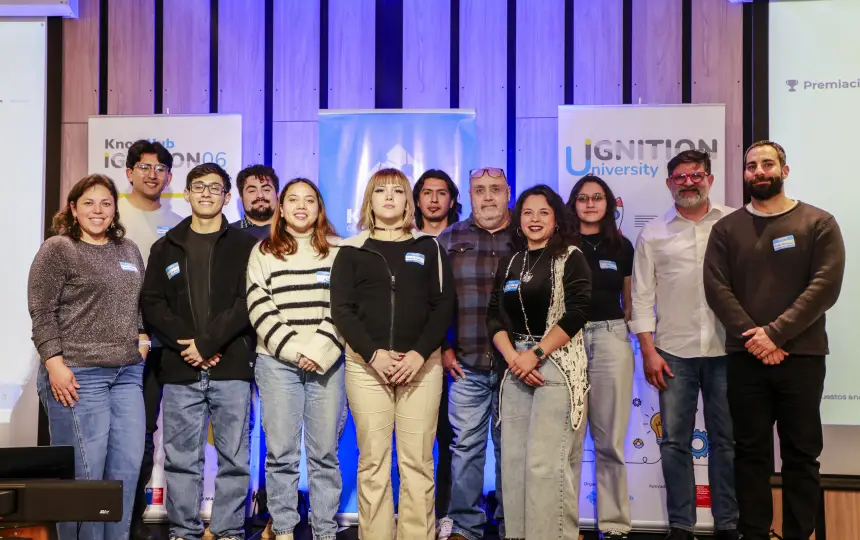
Seeking new solutions and innovations in the use of Lockheed Martin’s advanced exoskeleton, FORTIS, was the project that Universidad Austral de Chile (UACh) developed as winner of the FORTIS Challenge, a program run by Know Hub Chile together with Lockheed Martin, which held its closing ceremony on Tuesday, June 27, 2023.
In 2022, Know Hub Chile and the global aerospace and security company Lockheed Martin launched the FORTIS Challenge, an initiative aimed at the New Engineering for 2030 programs run by Chilean universities, which sought to improve the capabilities and expand the functionalities of the FORTIS exoskeleton.
The call was won by a multidisciplinary team of faculty members from UACh’s School of Engineering Sciences and School of Medicine, who analyzed the potential occupational applications of the FORTIS exoskeleton in the industrial and health fields, as well as validating ergonomic and productivity improvements for its use.
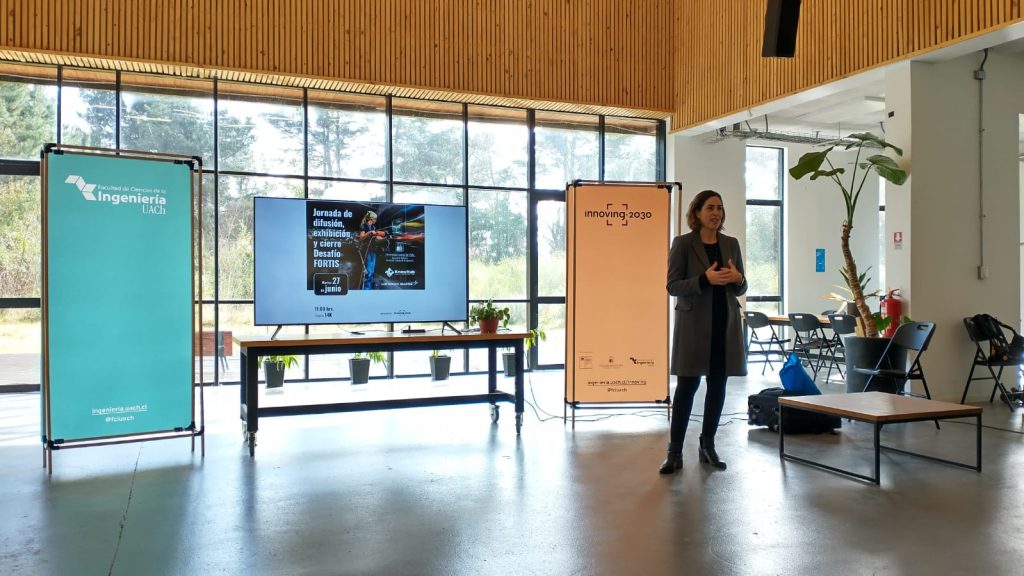
On Tuesday, June 27, the closing event and presentation of the FORTIS Challenge results took place at the 14K space of the School of Engineering Sciences at Universidad Austral de Chile.
Javier Ramírez, executive director of Know Hub Chile, said that one of the most notable elements of the project’s success was the multidisciplinary nature of the participating team, one of the key reasons the project was awarded to the university. “In working meetings they told us that the project served precisely to strengthen that multidisciplinary team, and my bet is that this multidisciplinary approach will spread within this university and, I also hope, to other institutions within the macro-region, to take on larger projects at the national and international level,” he highlighted.
Patricia Tobar, Business Development Manager for Lockheed Martin Latin America, expressed her satisfaction with the work done and the results achieved. “The team did very interesting work, with very good results. Lockheed Martin in Chile and the region is starting a collaboration in the innovation and development ecosystem, and we hope to continue collaborating in the future with universities in different Latin American countries, in this specific case with Chile and the region’s universities, where we have had excellent results,” she emphasized.
Scientific research
Guillaume Sérandour, director of the FORTIS Challenge and faculty member at the Institute of Design and Industrial Methods of the School of Engineering Sciences, explained that the analysis and work carried out on the exoskeleton focused on determining what worked and what did not, based on high-quality scientific research, with a standard methodology and strategically relevant results, “so there was a very good mix of theory, practice and the applications it may have in the future.”
From that research process, Sérandour said, the team concluded that possible applications of the exoskeleton in local industry include everything related to load handling. “An exoskeleton could be very useful for reducing injuries, so we do see potential, but with adaptations, since FORTIS is designed to support tools in relatively fixed positions, and that is where one can begin designing modifications that favor mobility or heavy loads, for example.”
Among the main results, Sérandour valued the team’s ability to take on this kind of challenge, where, he says, they were able to show that they have the capacity, both human and in infrastructure, to create this diagnostic and assessment tool for this type of device. “This time, we were able to grasp the scale of designing a world-class device, as well as our own capabilities in design and manufacturing, which makes us think we can enter that field,” he said.
Mauricio San Martín, the faculty member in charge of the Human Movement Analysis Laboratory at UACh’s School of Medicine, highlighted that the project “consolidates this team, because the work has been validated from both an international and a local perspective, and that makes us very happy. I think the way this work developed was a very natural path, and we are very pleased with how it came about. The power of a multidisciplinary team spanning engineering and health is a tremendous strength, and we are very happy about it,” he said.
The project developed by Universidad Austral carried out a thorough validation and proposed ergonomic and productivity improvements for using FORTIS in new sectors, which could facilitate its adoption in the occupational sector in general, supported by ergonomic and productivity indicators that confirm the improvement brought by the exoskeleton.