Universidad Austral and Lockheed Martin to work together on an innovation challenge to improve the FORTIS industrial exoskeleton

Know Hub News
· Santiago

Universidad Austral de Chile was selected to take part in the FORTIS Challenge 2022, an initiative that seeks to build ties between the national R&D&I ecosystem and an international benchmark of the aerospace industry such as Lockheed Martin.
Headquartered in Bethesda, Maryland, United States, Lockheed Martin is a global aerospace and defense company that employs approximately 114,000 people worldwide and is principally engaged in the research, design, development, manufacture, integration and sustainment of advanced technology systems, products and services.
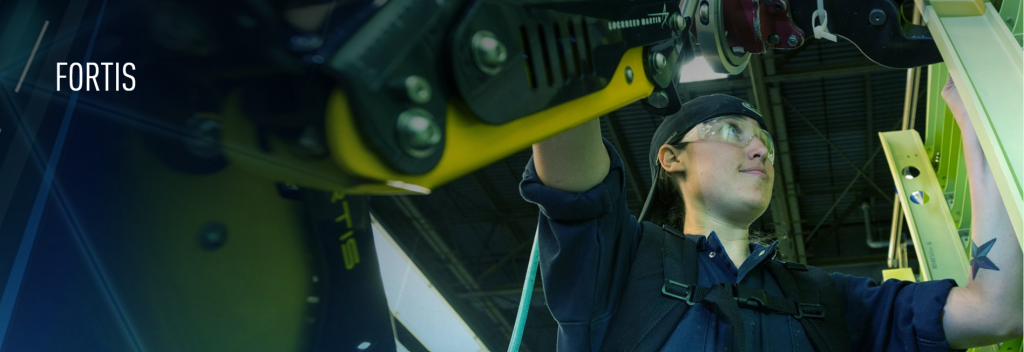
One of those advanced technologies developed by Lockheed Martin is FORTIS, which grew out of the multinational’s research on exoskeletons to help soldiers carry heavy equipment over long distances, and which applies the same operating and energy-expenditure principles of exoskeleton development for use in industrial environments.
It is a lightweight, unpowered device that makes tools weighing up to 17 kilos feel weightless. In this way, it reduces user fatigue and improves worker safety. It also features an advanced ergonomic design that moves naturally with the body and adapts to different body types and heights.
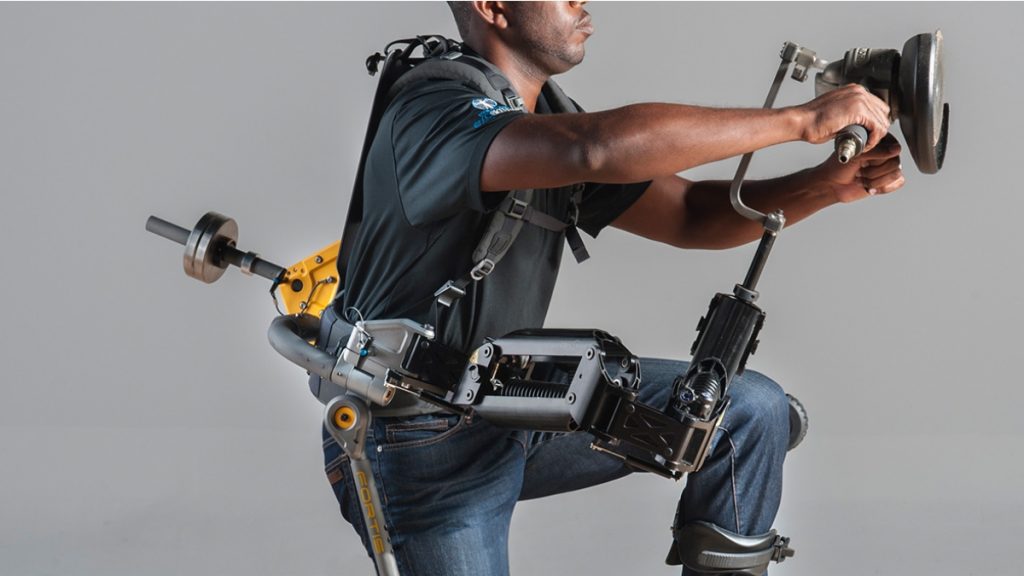
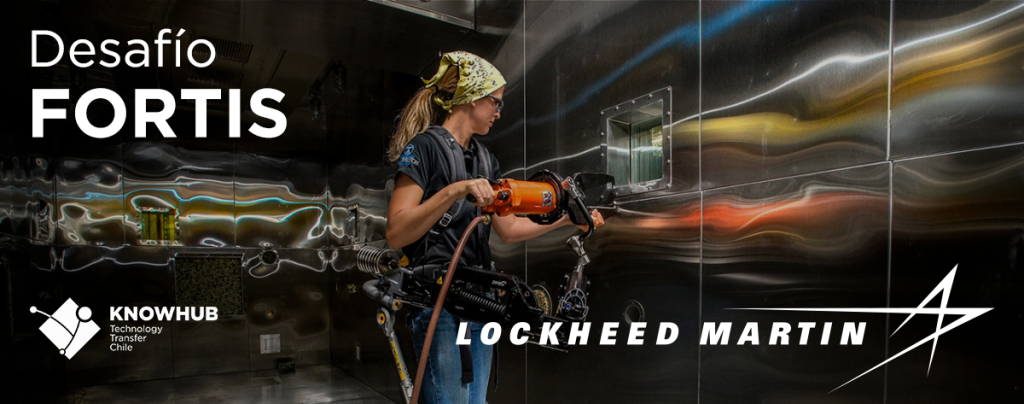
To seek solutions and new innovations in the advanced use of the FORTIS exoskeleton, Lockheed Martin and Know Hub Chile launched the FORTIS Challenge 2022, an initiative aimed at the Nueva Ingeniería para el 2030 (New Engineering for 2030) programs developed by Chilean universities. The call already has an institution selected for this innovation challenge: Universidad Austral de Chile.
The goals of the FORTIS Challenge 2022 are to build ties between the national R&D&I ecosystem and an international benchmark of the aerospace industry such as Lockheed Martin, as well as to improve the exoskeleton designed by the multinational. It is an initiative of Know Hub Chile’s Know Hub Dual-Tech program, whose goal is to bring the defense sector into the national innovation ecosystem.
Selected project
In the final review of the proposals, carried out together with Lockheed Martin’s technical committee, the project selected to solve the FORTIS Challenge 2022 was the one from Universidad Austral de Chile
The project, submitted by the team at LeufüLab, the university’s Digital Manufacturing and Prototyping Laboratory, together with faculty from the university’s School of Engineering Sciences and School of Medicine, seeks in a first stage to analyze the potential occupational applications of FORTIS in the industrial and health fields in the Central-South, South and Austral Macrozones, areas characterized by sectors such as forestry, aquaculture, agribusiness and shipbuilding, where repetitive activities requiring high physical effort are carried out, affecting large joints such as shoulders, hips and knees, among others. Other applications are also proposed in emergency services, mainly related to load handling.
In addition, the selected project proposes validating ergonomic and productivity improvements from the use of FORTIS in new sectors, which could facilitate its adoption in the occupational sector in general, supported by ergonomic and productivity indicators that prove the improvement from using the exoskeleton. This work is expected to extend into three areas of interest: adaptations and/or improvements to the exoskeleton, for example the hip joint, in line with local requirements; incorporating sensors and actuators that provide sensory feedback to prevent injuries during activity at critical workstations; and using immersive virtual reality environments in controlled scenarios to practice and learn motor gestures for training exoskeleton users.
Universidad Austral has been methodically building an innovation-oriented environment within its academic community. Dr. Germán Rehren, Director of the Development and Innovation Department of the Vice-Rectorate for Research, Development and Artistic Creation at Universidad Austral de Chile, says that this award with a global player in innovation and development such as Lockheed Martin “is important proof that we are on the right track.”
Rehren highlights two strengths of the team that won the FORTIS Challenge: the innovation experience of the School of Engineering’s Leûfulab Laboratory, which leads the proposal, and the wide variety of disciplines involved in the search for solutions (medicine, engineering, kinesiology, among others). “This shows the importance of collaborative innovation,” he says. He also highlighted the role of Innoving2030 in bringing together the winning team.
“From the Vice-Rectorate we will work to consolidate and scale this collaboration with Lockheed Martin, to keep driving collaborative R&D at our University, and to give industry engagement the importance it deserves for specific current and long-term challenges in innovation and technology transfer,” says Rehren.
International alliance
Javier Ramírez, executive director of Know Hub Chile, says that “Lockheed Martin understands that it has to be perceived as a relevant player in the ecosystem, a technology co-developer with local capabilities and early results to validate itself; that is where the FORTIS Challenge 2022 comes from”.
All the projects received in the call showed an outstanding level, the executive director of Know Hub Chile notes. “In the case of Universidad Austral de Chile, it was selected because it put forward projects closely related to the exoskeleton field, which are expected to achieve results at a more advanced stage of development and in the industrial areas of application of FORTIS that are most relevant to Lockheed Martin,” he says.