
Working together for innovation: Know Hub Chile brings together the public and private sectors, academia and defense around dual-use innovation

Know Hub News
· Santiago

The second edition of the Dual Hub Summit brought together government officials, international experts and leaders of the national ecosystem to establish dual-use innovation as a key opportunity for the country’s development.
On August 5, the second Dual Hub Summit took place at the Facultad de Ciencias Físicas y Matemáticas of the Universidad de Chile. Organized by Know Hub Chile, the event brought together representatives of the public and private sectors, academia, defense and the national innovation ecosystem to advance the development of dual-use innovation in the country.
Among the officials and distinguished guests were: Congressman Álvaro Carter and Congressman Andrés Jouannet, both members of the National Defense Committee of the Chamber of Deputies; the Undersecretary for the Armed Forces of the Ministry of National Defense, Galo Eidelstein Silver; the Regional Ministerial Secretary (Seremi) of Economy, Development and Tourism for the Metropolitan Region, Cristián Rodríguez; the Head of the Sustainable Productive Development Division of the Ministry of Economy, Aintzane Lorca; and members of CORFO’s leadership team, represented by Maricho Gálvez, Entrepreneurship Manager; Fernando Hentzschel, Technological Capabilities Manager; and Jocelyn Olivarí, Innovation Manager.
Representatives of academia and defense also attended, including Air Force General Luis Felipe Sáez Collantes, Commander of the Logistics Command of the Chilean Air Force (Fuerza Aérea de Chile); Dr. Marcela Munizaga, Vice Dean of the Facultad de Ciencias Físicas y Matemáticas of the Universidad de Chile; and Dr. Viviana Meruane, Academic Director of Research and Innovation at the same school.
Bringing together knowledge, markets and national strategy
In his remarks, Undersecretary Galo Eidelstein called for strengthening the strategic vision for these capabilities and stressed that technological development in defense must be accompanied by a solid commercial strategy, without which these advances are unsustainable. He emphasized that projects such as the icebreaker or the Pillán aircraft require a market vision to go beyond domestic use, and that Chile has already demonstrated its export capacity in defense, but to compete globally it must strengthen its political, diplomatic and commercial ties.
Along the same lines, CORFO’s Entrepreneurship Manager, Maricho Gálvez, highlighted the role of the State in driving sustainable transformations: “What matters is that, as a country, we take on these challenges as a State policy, and that gatherings like this one drive major initiatives in areas such as the energy transition, decarbonization, green hydrogen and shipbuilding.”
For her part, Aintzane Lorca, of the Ministry of Economy, said that the Dual Hub Summit is aligned with the government’s goal of fostering sustainable growth. “What we are doing is looking at how to incorporate higher levels of knowledge, technology and innovation into productive processes, because that has been shown to generate sustainable long-term growth. That is why innovation is so relevant, and dual-use innovation, which is fundamental, like this experience of combining what happens in the administration and the civilian world, can help boost different innovations.”
On behalf of the organizers, Germán Holmberg, chairman of the board of Know Hub Chile, stated: “The science generated in our laboratories must be turned into concrete solutions to the country’s challenges, and that transformation requires spaces where academia, entrepreneurship, industry, defense and the public sector come together.”
The event also featured the international participation of Gene Keselman, Executive Director of MIT’s Mission Innovation Experimental (MIx) program, who noted that the role of the State is key to creating enabling conditions. “It’s not about picking winning startups, but about creating conditions: defining real problems, sending demand signals, enabling funding, and then getting out of the way. Structure is destiny,” he said.
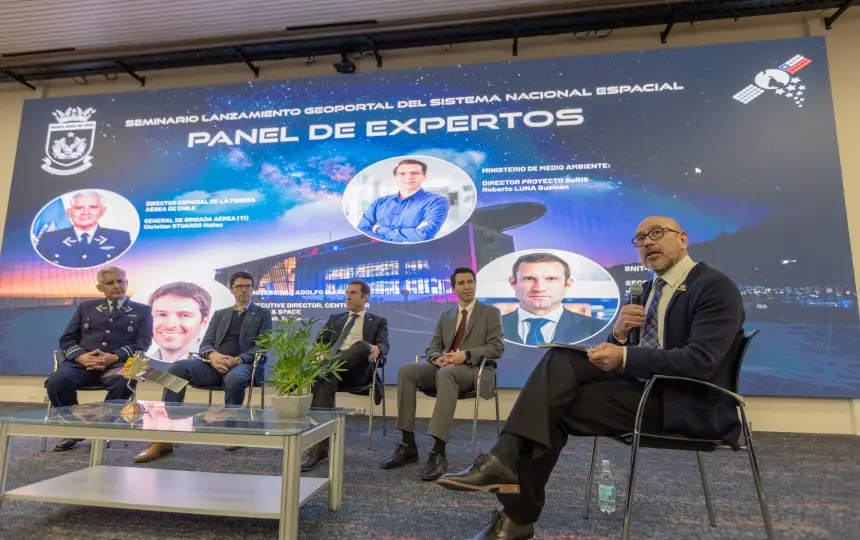
Enrique Bustos Martín, delegate in Chile of the Center for Technological Development and Innovation (CDTI) and PhD in Chemical Sciences from the Universidad de Valladolid, was another invited international expert. In his presentation he shared the European experience in dual-use innovation, highlighting how public policy can create competitive and sustainable scientific and technological ecosystems. Through the case of the CDTI —an agency that, although it reports to Spain’s Ministry of Science, has worked closely with the Ministry of Defense to create a dual-use projects office—, he presented a successful international model of enabling architecture for dual-use innovation that brings together science, business and the State around strategic challenges such as space surveillance and innovative public procurement.
Closing of Desafío Avante 04
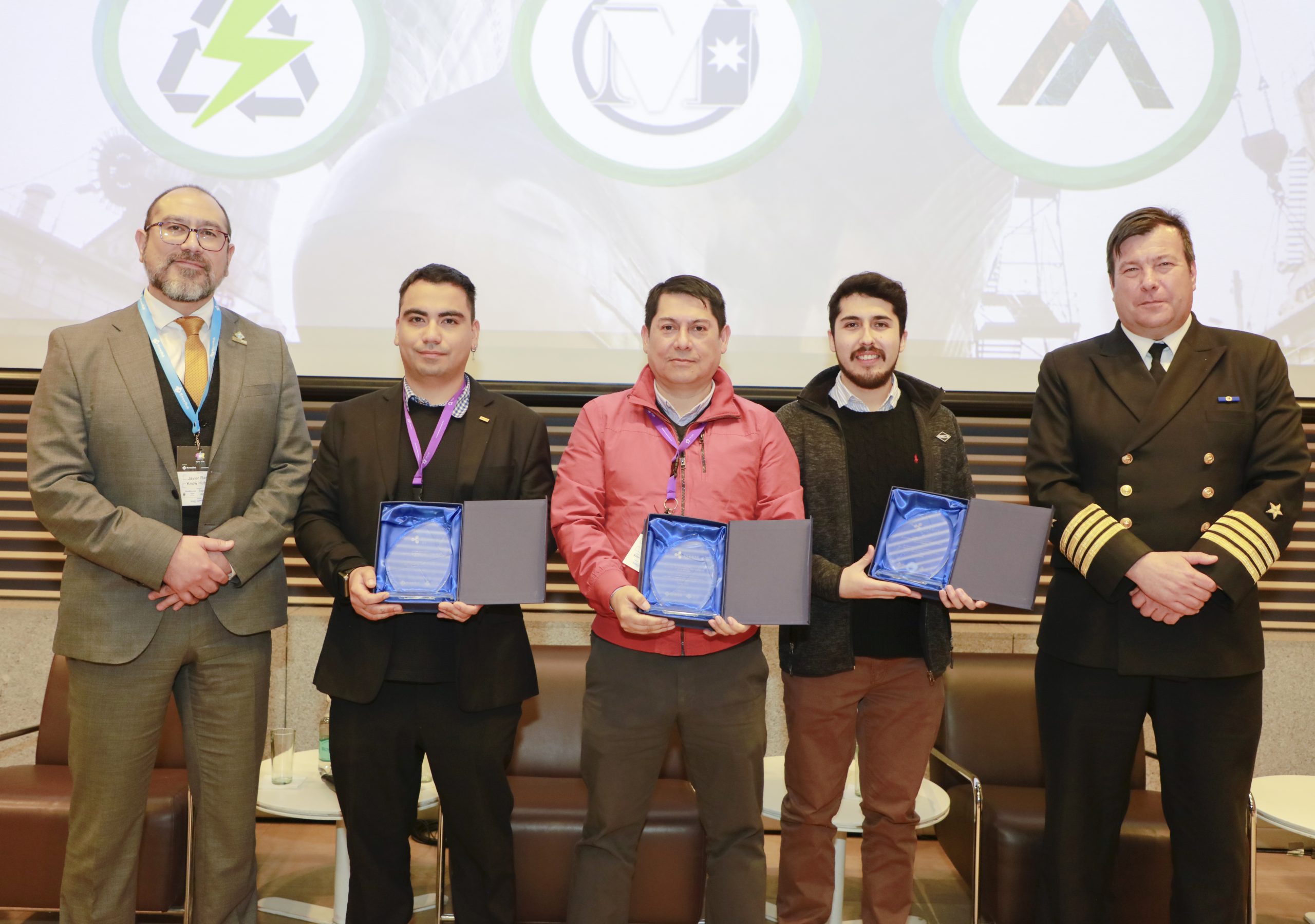
The final of Desafío Avante 04 was held as part of the Dual Hub Summit. The program is one of the most robust examples of dual-use innovation in Chile. After ten months of work, collaboration and technology validation, the three teams that will move on to the next stage of development were recognized: Mine Analytics, which proposes software to improve planning and coordination in shipyards; Centro de Innovación Moderniza, which develops cost and schedule control tools for shipbuilding projects; and Bosses, with a hybrid propulsion system for small vessels that cuts fuel consumption by up to 30%.
Since its creation in 2020, Avante has evolved from an experimental initiative into a consolidated open innovation model, bringing together entrepreneurs, universities, research centers, large companies and units of the Chilean Navy. Its main value has been to show that collaboration between civilian and military actors can generate high-impact technologies with both strategic and commercial applications. This fourth edition, focused on shipbuilding, reinforces the program’s potential to scale technology solutions to industries such as logistics, mining and healthcare, thus contributing to the country’s scientific, productive and technological development.
Finally, Javier Ramírez, executive director of Know Hub Chile, stressed that dual-use innovation must stop being an isolated effort and become a long-term policy:
“We firmly believe that dual-use innovation is neither a futuristic idea nor exclusive to the military world: it is a real opportunity to diversify the productive matrix, foster technological autonomy and create high-value jobs. With strategic vision and collective commitment, it can become a true engine of development for Chile.”
The Dual Hub Summit was sponsored by institutions such as the Chilean Air Force, the Chilean Navy’s Technological Innovation Center, Open Beauchef, the Facultad de Ciencias Físicas y Matemáticas of the Universidad de Chile, FIDAE, DTS, CDTI (Spain) and MIT’s MIx program. It was also supported by Lockheed Martin, Saab and Oracle, with funding from CORFO Nacional, CORFO Bío-Bío and ANID.