Matías Moya, CEO of Photio: “Know Hub has a support model that is hard to find in the ecosystem”

Know Hub News
· Santiago

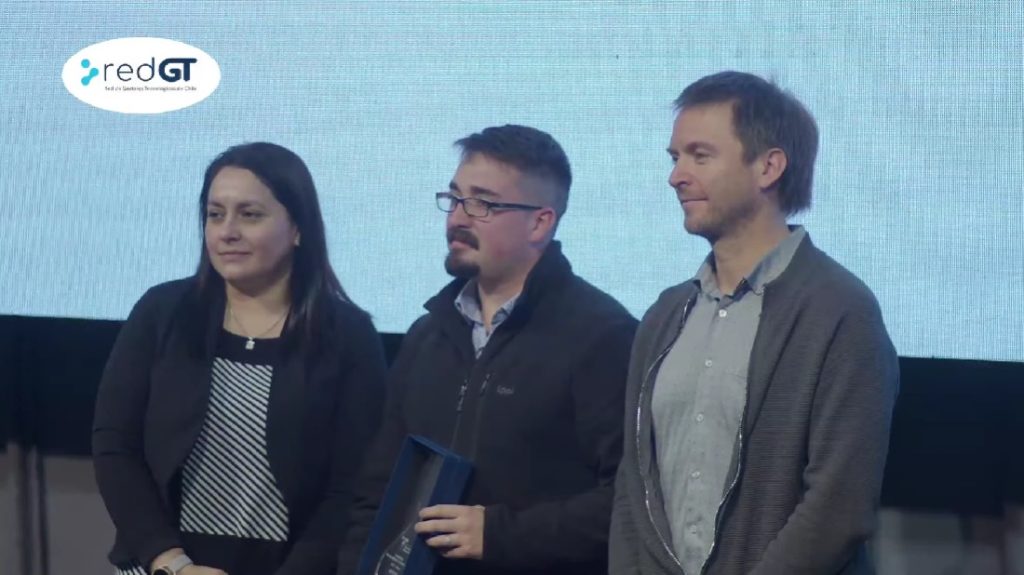
Photio, winner of Know Hub Ignition 2020, has earned a new recognition as Best Chilean Science-Based Startup (EBCT) at the 6th Technology Transfer Awards presented by the Ministry of Science, Corfo and RedGT. “This award is also for Know Hub, which played an important part in helping us take the initial leap from the lab to the commercial side,” says Matías Moya.
In 1871, Italian pulmonologist Achille Visconti coined the term silicosis to refer to the disease caused by inhaling silica dust, a crystal present in rocks, soil, sand and materials such as concrete and cement, among others. For centuries, this dangerous lung disease was one of the leading causes of death among mine workers worldwide. And Chile was no exception: during the 19th and early 20th centuries, mortality from this cause among coal miners was extremely high.
Unfortunately, the disease is far from a thing of the past. Despite medical advances, it is incurable.
In Chile, silicosis is a public health problem because it is incurable and progressive. A study published in 2015 in the Revista Chilena de Enfermedades Respiratorias estimated that 440,801 workers are potentially exposed to it, and also noted that fewer than 10% of those potentially exposed are under medical surveillance.
In mining, air pollution is a complex problem. The respirable dust and gases suspended in these environments contain very fine particles that, when inhaled, can reach lung tissue. As a result, there is a risk not only of silicosis but also of other pneumoconiosis diseases (dusty lung), such as asbestosis (inhalation of asbestos fibers), which can cause dysfunction, disability, cancer and premature death.
Trees in the mines
Reducing exposure to respirable pollutants in mining directly lowers the risk of lung disease among the people who work there. That is why finding solutions is so urgent.
That was the motivation in 2017 for two young Chileans, Matías Moya and Jaime Rovegno, both mining engineers, who were studying at the Universidad de Chile’s Innovation Laboratory for Mining and Metallurgy (LIMM) and wanted to find a way to reduce the danger of polluted air in mining activities. They were later joined by Constanza Escobar, a chemical engineer from the Universidad de Chile. All three came from the mining world and were aware of the scale of the problem.
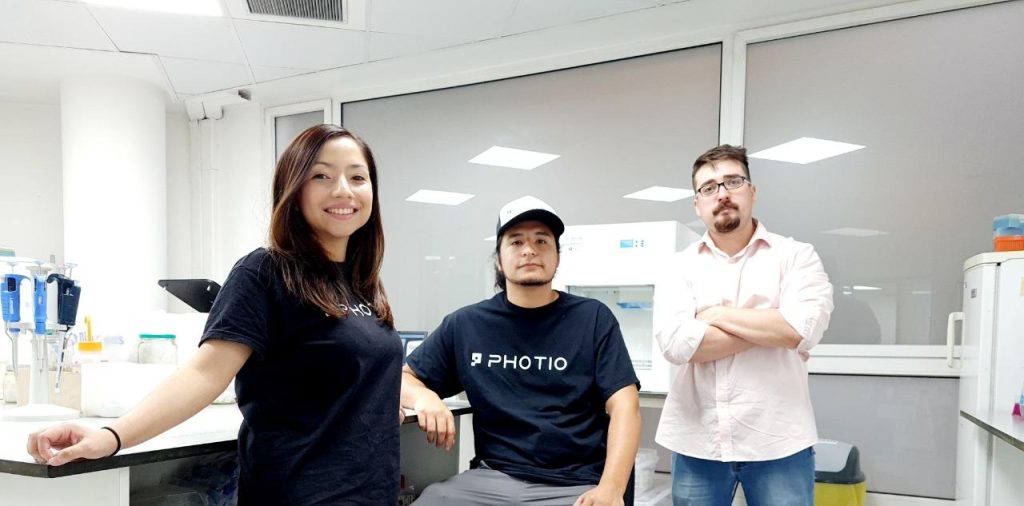
“Pollution in mining is the most hostile pollution scenario, not only dust but also gases; it is a very broad problem. We wanted to solve it in an innovative way that would be easy to implement. We wanted to start a business and have an impact on society. We didn’t know how, or whether it was feasible, but we wanted it to be easy and practical to implement,” says Moya.
Planting trees or shrubs in the mines was one of their first ideas. That way they could harness the natural process of photosynthesis, which absorbs small suspended particles and gases. “But we quickly realized it wasn’t viable,” says Moya. However, that first approach inspired them to look for ways to replicate the natural process and bring those benefits to spaces such as mining.
The next step was to look for a solution through nanotechnology. It was not the team’s field of expertise, “but now we are experts,” says Moya. They learned about and researched what nanoparticles were and how they worked in practice, until they applied that technology to the problem they were trying to solve.
In 2020, they devoted themselves to experimenting and testing their findings with different pollutants. It was a process of trial and error that they carried out at home, without any rush. “We were mining consultants and after work we dedicated ourselves to this, which was the best thing because we didn’t have the pressure of generating a salary and we gave ourselves the time to actually develop something,” Moya says of the work that led to the formulation of the nanoparticle complex they called Photio.
“We didn’t want to compete with trees; what we wanted was to capture polluting gases and use solar radiation to do it. And we succeeded,” says Moya.
For a mining application scenario, they first thought of using the additive to make sheets to coat different surfaces. Then they considered separating the active ingredient so that it could be applied much more flexibly. “We thought about applying it in a paint and taking it to market. But we realized we needed extremely high investments, and also that people choose paints simply by color and not by their properties. We would have had to create a gigantic color palette, and what we would have had was a depolluting paint,” he explains.
That was when they realized there had to be an easier way. Instead of launching a new product line, they would have an additive. “Regardless of the paint, this turns it into a depolluting paint. That’s how the first commercial product started, which was a paint additive, and in parallel the same model can be replicated with different materials such as concrete, asphalt or to transform synthetic leather. There are millions of options where it can be applied to turn them into smart materials or surfaces capable of having a positive impact on the environment.”
Surfaces painted or coated with Photio and exposed to solar radiation (natural or artificial) are able to break down polluting gases, such as carbon dioxide and methane, transforming them into inert compounds (a photochemical process).
It can also degrade greenhouse gases and local emissions in short reaction times. One square meter painted with this additive is equivalent to the depollution carried out by two trees through photosynthesis.

Validation and commercialization
After two years developing the technology came the validation step, “and the most exciting and difficult part was still missing, the commercial part,” says Moya.
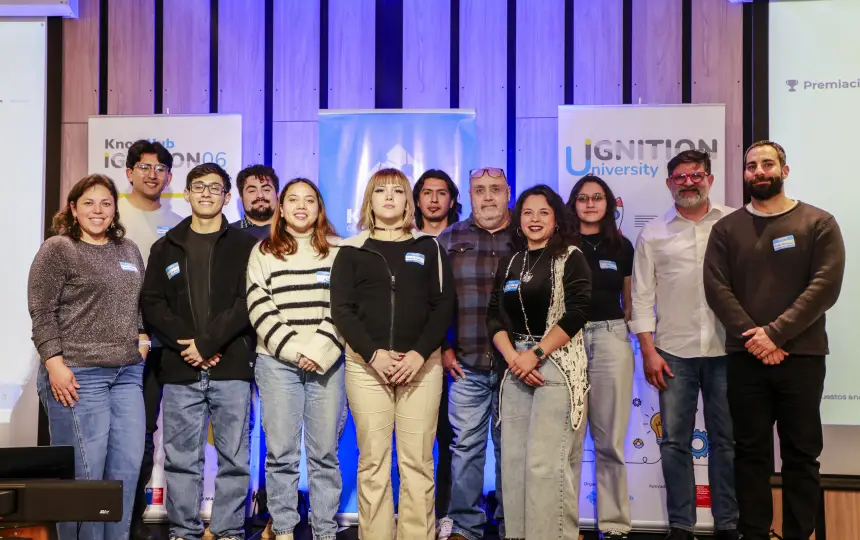
In 2020, Photio took part in Know Hub Ignition and was one of the winning EBCTs. “What we were looking for was to make the link between development and commercialization, between the scientific and commercial sides. After two years of development we were deeply immersed in R&D, but we were still somewhat distant from the commercial side,” he says.
At Know Hub Ignition they made commercial contact with customers, and that, he adds, was very useful. “It helped us understand what customers were looking for, learn to explain the technology simply, and immediately get closer to a huge market like the North American one, because there were international mentors, mentors we are still in contact with, and thanks to them we are obtaining several certifications in the United States. The University of California Riverside, Know Hub’s strategic partner, is now our strategic partner in the United States,” Moya highlights.
For the Photio team, Know Hub Ignition was the support that allowed them to validate the technology in the market and gave them the legal and intellectual property backing they needed to move forward. It has been a process of multiple recognitions, to which they recently added the award for best Chilean EBCT at the 6th Technology Transfer Awards, presented by the Ministry of Science, Technology, Knowledge and Innovation, the Corporación de Fomento de la Producción (Corfo) and the Red de Gestores Tecnológicos de Chile (RedGT). “This award is also for Know Hub, which played an important part in helping us take the initial leap from the lab to the commercial side, to selling,” says Moya.
“Know Hub has a support model that, in practice, is hard to find in the ecosystem. It was an extremely important strategic partner, and that is what you look for as an entrepreneur: companionship and a more complete vision. Many incubators limit themselves to providing the funds and managing them, and nothing more, with a meeting once a month to see what is going well or badly. Know Hub, by contrast, was like one more person on the team; if we were missing a legal document, they would say: ‘let’s look at it together.’ It is a highly collaborative effort, and it has continued over time.”
Photio’s CEO highlights how Know Hub values the entrepreneur’s knowledge and knows that it must be strengthened. “They accompany you, they advise you, they are very empathetic, and as an entrepreneur you really value that. Chile has many funds depending on the stage of development; there is no shortage of funds. What is missing are strategic partners that really help you grow depending on the stage you are at, and that is what Know Hub does.”
Learn more about Photio: